

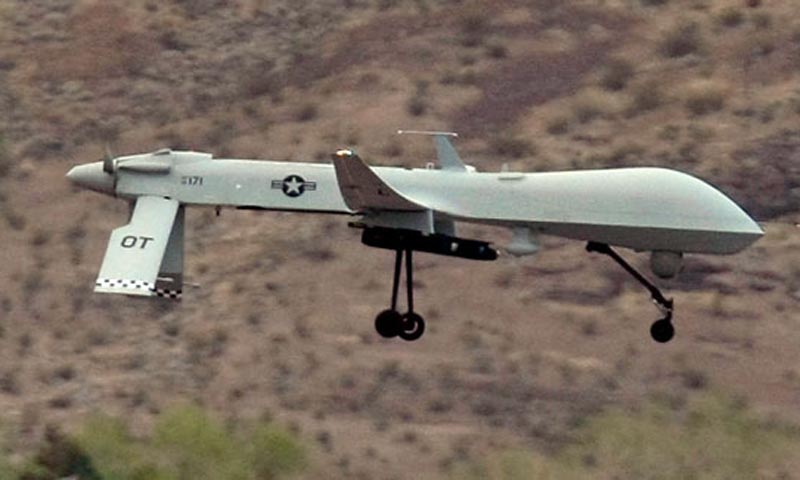

ISLAMABAD: US CIA drone strikes against militants in Pakistan killed no more than four civilians last year, according to an annual study by a British-based organisation, the lowest number of reported civilian deaths since the drone programme began in 2004.
The study by the Bureau of Investigative Journalism, released this month, showed that the number of civilian casualties stood at between zero and four. The figures were, however, drawn from the Bureau's own investigation and have not been independently verified.
The findings may reinforce the position of those who support unmanned drones in a debate over the legality, effectiveness and accuracy of the strikes compared to more traditional military operations.
The United States releases no information about individual strikes. Information issued by Pakistan's government is patchy.
The Bureau tracked 27 suspected strikes, using news reports,field investigations and research by Amnesty International.
It said drones, used mainly in remote northwestern areas,killed altogether 112-193 people in 2013. The death tolls varied as different sources often gave conflicting accounts.
Increased scrutiny, political pressure and a sharp drop in the number of strikes may have helped cut civilian casualties,said Alice Ross, who heads the Bureau's drone research unit.
“The lack of transparency surrounding the drone campaign means it's very hard to say what's causing the drop in civilian casualties,” she told Reuters by telephone from London.
“The fact they can now take out a single room in a building does suggest the technology and intelligence are quite advanced,but we haven't seen a commensurate fall in civilian casualties in Yemen.”
Decline in strikes, casualties
In 2012, the Bureau tracked 47 strikes, with civilian casualties put at 13 to 63.
The drop indicated that previous civilian casualties were genuine, Ross said. Amnesty International has documented strikes that killed a grandmother and a group of labourers in 2012.
“If civilian casualties had been fabricated, you would expect it to continue,” she said. She said more reports of civilian casualties might still emerge.
Possible civilian deaths on Jan 8 and Feb 6 last year were reported by some Pakistani media.
The New York Times reported that the Feb 6 attack may have been an air strike by the Pakistani military, something they denied.
Some Pakistanis welcome the strikes, saying they kill fewer civilians and are far more effective against Taliban militants than traditional military operations.
Others argue the strikes still cause civilian casualties, terrify residents and violate Pakistani sovereignty. Prime Minister Nawaz Sharif says he wants them to end.
Activists from the Pakistan Tehrik-i-Insaf political party are blocking a Nato supply route to Afghanistan to protest against the strikes.
A PTI spokesperson did not respond to requests for details of civilian casualties.
The figures for civilian deaths in Pakistan are much lower than those reported for Yemen.
Yemeni officials told Reuters a December strike hit a wedding party.
The bureau says 61-99 people were killed in 16 confirmed drone strikes in Yemen last year, and 11-29 of them may have been civilians.
There were another 16 suspected drone strikes.
In Afghanistan, Nato is investigating a September drone strike.
Afghan officials say it killed eight women and children.
Since 2004, Pakistan has been hit by 381 drone strikes, the Bureau says, and between 416-951 civilians have been killed.




























