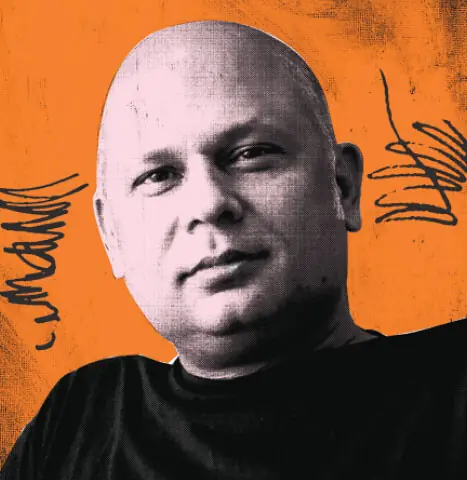
DISTINGUISHED critic Dr Anwar Ahmad has come out with a novel idea. He says that “we stand in need of some common references and experiences, which have the capability to bring unity among the common people of this country”. He adds that “we need to have an understanding of the cultural and creative tradition of different Pakistani languages such as Urdu, Punjabi and Seraiki. With this need in view, he has chalked out a programme for bringing out a journal called Peeloun.
A focus on three Pakistani languages, Urdu, Punjabi and Seraiki, was decided on to determine the creative significance of three poets — Majeed Amjad, Ustad Daman and Ashiq Buzdar — representing the three aforementioned languages respectively.
The present issue of Peeloun may be deemed an outcome of their deliberations. This special issue running to 358 pages has been published under the editorship of Dr Ahmad, who is assisted by Dr Syed Aamir Sohail, Mohammad Arif, Imran Mir and Sajjad Naeem.
However, this group of poets appears to be a bit discordant; Ustad Daman and Ashiq Buzdar are known, as pointed out by Dr Ahmad, for their revolutionary zeal, while Majeed Amjad with his passive and pessimistic temperament stands opposed to them. But they could not afford to ignore him.
He, belonging to their own region, appears to be the most favoured poet of the Urdu world. Critics and readers of Urdu poetry appear in general to be under the spell of his poetry as if trying to compensate for their sin of ignoring him during his lifetime.
Dr Anwar is well-aware that this discordance will shock the readers. But this shock, he says, is intentional. He means it. But for what purpose he does not explain.
The issue is divided into three sections, each section reserved for the study of one of the three poets. As portrayed by their admirers, they come alive with their peculiar behaviours. Ustad Daman behaves in his typically unsophisticated way. Sophistication is something foreign to his personality; he is a carefree man. Spontaneity is the hallmark of his personality as well as of his poetry.
Ashiq Buzdar has been welcomed as a poet of resistance. What distinguishes him is his humility. Though the son of a feudal lord he hardly betrays in his behaviour an air of superiority. Such is the kind of man which emerges in the writings.
As for Majeed Amjad, the third person in this trio, he perhaps is a misfit in a company whose hallmark is their revolutionary zeal. As opposed to them, here is a poet, a man with a fragile constitution, keeping a low profile, never loud, neither in his talk nor in his poetry, happy with his cycle, his lifelong companion.
The volume is a tribute to the three poets representing three languages and varied poetic sensibilities. It is a breakaway from various current selections of poetry compiled generally for poetry’s sake only. This venture has a purpose, that of national import.