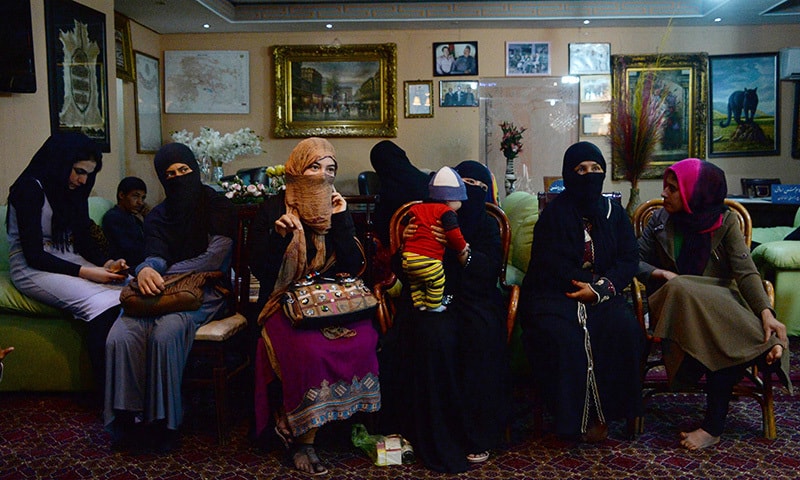

KABUL: Hiding in her basement, a Kunduz radio presenter was paralysed with fear when the Taliban came looking for her as they conducted house-to-house searches for working women after storming the northern Afghan city.
Long condemned as misogynistic zealots, the Taliban have sought to project a softened stance on female rights, but the insurgents' three-day occupation of Kunduz offers an ominous blueprint of what could happen should they ever return to power.
Harrowing testimonies have emerged of death squads methodically targeting a host of female rights workers and journalists just hours after the city fell on September 28.
When they knocked on the radio host's door, her uncle answered, she told AFP, requesting anonymity due to safety concerns.
“We know a woman in your house works in an office,” she said they told him.
“When my uncle denied it, he was taken outside and shot dead. His body lay in the streets for days — no one dared to go out and get it.”
Such testimonies hark back to the Taliban's 1996-2001 rule of Afghanistan, when women were relegated to the shadows.
Rights groups say female prisoners in Kunduz were raped and midwives were targeted for providing reproductive health services to women.
Rampaging insurgents destroyed three radio stations run by women, looted a girls' school and ransacked offices working for female empowerment, stealing their computers and smashing their equipment, according to several sources including activists and local residents.
One of their main targets were women's shelters, which give refuge countrywide to runaway girls, domestic abuse victims and those at the risk of “honour killings” by their relatives.

The Taliban have often denounced the shelters as dens of “immorality” and labelled the women who seek shelter there as “sluts”.
“Where are you hiding those women from the shelter?” Haseena Sarwari recalled being asked in an abrupt phone call from the head of the Taliban's vice and virtue department soon after they took the city.
“They are safely in Kabul,” Sarwari, the Kunduz director of Women for Afghan Women, an NGO which ran a shelter housing 13 women, said she told the insurgent.
“He laughed and said: 'It's good for them they managed to get away'.”
That shelter has since been burned down.
'Threaten, attack, kill'
The Taliban tried to project a moderate view on women's rights through informal peace talks earlier this year, where insurgent representatives for the first time sat across the table from Afghan women and even prayed alongside them.
“There has always been a serious disconnect between their vague promises and the behaviour of the Taliban on the ground, where they have continued to threaten, attack and kill women who stepped out of roles of total subservience,” Heather Barr, a researcher with Human Rights Watch, told AFP.
“In Kunduz we may have caught a glimpse of how little their pledges to women are worth.”

Sarwari is no stranger to threats from the Taliban, but the married mother-of-two also received an astonishing letter just before the insurgents stormed Kunduz.
Wrapped in a wedding card, the note warned that she would be married off to a Taliban commander.
Sarwari said the threat could not be dismissed lightly. In some areas overrun by the Taliban, she said insurgents are known to have married off wives of government officers to their cadres, treating the women as spoils of war.
Women who fled Kunduz said the Taliban used a “hit list”, including names, photos and mobile phone clips of their targets, sparking fears there had been a large-scale identity theft from the computers and documents stolen from various city offices.
Many received calls and text messages with a clear message from the Taliban: “Don't come back or we will kill you.”
As Sarwari was fleeing the city in a burqa, she recalls seeing a band of thickset insurgents wrapped in bandoliers of ammunition at Taliban checkpoints, rifling through women's purses for any government IDs and scrolling through mobile phones for contacts.
They also chastised some women for travelling without a male chaperone.
“The Taliban still adhere to the idea that women must submit to men, that they are half-brained, and offer mere ornamental value,” Sarwari said during an interview in Kabul.
“The tumult in Kunduz showed us that their medieval mindset has still not changed.”