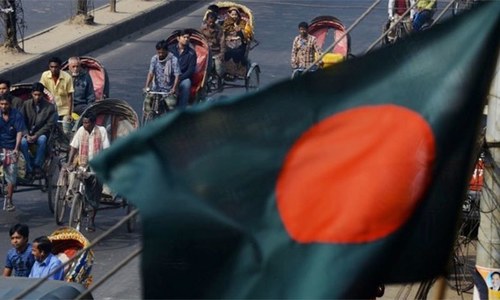
ISLAMABAD: Bangladesh has felt offended over Pakistan reminding it of its founding father’s promise contained in the 1974 tripartite agreement under which Dhaka had agreed not to proceed against those whom it had accused of ‘war crimes’ during the 1971 separation.
Pakistan’s High Commissioner in Dhaka Shuja Alam was summoned by Bangladesh Foreign Secretary Mijanur Rahman on Monday to receive a protest over a statement issued by Pakistani Foreign Office in which it regretted executions of two Bengali leaders related to 1971 events and had called for reconciliation in Bangladesh in accordance with the spirit of Pakistan, India, Bangladesh Agreement of April 9, 1974.
The FO had further said that it was “deeply disturbed at this development”.
Bangladesh’s foreign secretary told High Commissioner Alam that Pakistani comments are tantamount to interference in his country’s internal affairs.
The resumption of the trial of the ‘war crimes’ accused by Prime Minister Hasina Wajid’s government in 2009 had soured the bilateral ties. The latest spat follows the execution of senior Bangladesh Nationalist Party leader Salahuddin Quader Chowdhury and Jamaat-i-Islami’s secretary general Ali Ahsan Mohammad Mujahid on Sunday.
The two had been convicted of genocide and rape by a domestic ‘war crimes tribunal’ called International Crimes Tribunal (ICT), which had been set up under a 1973 legislation that was amended in 2009 to resume the trials.
The original 1973 legislation for the establishment of war crimes had been set aside by Hasina Wajid’s father and Bangladesh’s founding father Mujibur Rehman after a tripartite agreement signed in April 1974 for the repatriation of war prisoners. Rehman had then agreed that in the interest of regional peace, no one would be put on trial for alleged crimes committed during the 1971 war.
The agreement signed in Delhi by the then foreign ministers of Bangladesh, India and Pakistan had included a promise by the Bangladesh foreign minister that “the Government of Bangladesh had decided not to proceed with the trials as an act of clemency”.
The accord had specifically mentioned a statement by Bangladesh Premier Mujibur Rehman that “he wanted the people to forget the past and to make a fresh start, stating that the people of Bangladesh knew how to forgive”.
Bangladesh government had soon after the agreement revoked a tribunal it had then established for the trial of what it called ‘collaborators’.
The issue resurfaced in a big way when Hasina Wajid made the trial of ‘war crimes’ accused an election promise in 2008. After winning the polls she proceeded with the trials. Two tribunals were set up, which indicted more than a dozen men, most of them from Jamaat-i-Islami.
Sentences have been handed down in most of the cases. Four men convicted by the tribunals have so far been executed. Another accused died while his appeal against conviction was being heard.
Meanwhile, Delwar Hossain Sayedee’s death penalty has been revised and he has been given life sentence.
Former Foreign Secretary Salman Bashir, when asked about the sanctity of 1974 agreement and the executions by Bangladesh government, said: “The assassinations in the context of sham trials raise serious legal, moral and political issues. These are obviously a travesty of justice. Tripartite Agreement has been violated.”
Another Former Foreign Secretary Shamshad Ahmed, meanwhile, said: “the tripartite agreement is a legally binding document under which Bangladesh government has a contractual commitment, which it must honour”.
Former Law Minister and international law expert Ahmer Bilal Soofi believes the trials of those accused of ‘war crimes’ were marred by abuse of due process of law. Moreover, he said, the trials had serious issues of retrospectivity and denial of justice, besides violating Article 14 of International Covenant on Civil and Political Rights.
Mr Soofi said the executions violated the 1974 agreement and Pakistan could take up this issue at international fora, particularly the Human Rights Council.
Published in Dawn, November 24th, 2015