I HAVE read a few works of fiction during the course of 2015, among others Adelbert von Chamisso's Peter Schlemiel and The Man Who Sold His Shadow; Cabrera Infante's Infante's Inferno; Anour Benmalek's The Child of an Ancient People; Olga Grjasnowa's All Russians Love Birch Trees; Juan Goytisolo's Makbara and Marks of Identity; Ian Bedford's The Last Candles of the Night, Marion Molteno's Uncertain Light, and Kader Abdolah's The House of the Mosque - interesting works in their own right, especially Post-Modernist Goytisolo's, whose experiments in prose narrative break the balance of technical devices ordinarily used in constructing novels and, hence, not an easy read. However, it is not these that I want to talk about.
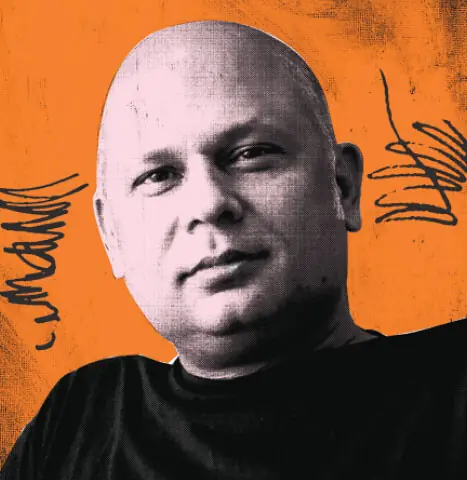
I want to talk briefly about Goytisolo the person, not the novelist. My interest in him grew as a by-product of my larger interest in "medievalism" and al-Andalus, whose culture and achievements continue to fascinate me. In 1956, during the oppressive years of Franco's dictatorship, Goytisolo, aged 25, left his native Spain for France and became an internationally acclaimed novelist within a decade. However, he didn't go back, even after Franco, when Spain had eased into a democratic way of life. The continuing self-imposed exile was the result of deeply-rooted ideological reasons which were larger and went farther than merely the politically repressive climate of his birth land. He didn't want to return to a Spain that so brutally denied him his rightful Andalusian heritage and was, along with the rest of Europe, hell-bent on wiping out every last trace of a culture, which though produced by the indigenous Muslim, Jewish, and Christian population, was nonetheless something of an aberration, an unwelcome 'outsider' best exiled forever from the history of medieval Europe.
To 'harden' and 'define' his exile, Goytisolo - novelist, short story writer, poet, and essayist - moved to North Africa, where he learned Arabic, adopted North African children and made them his heirs, and calls himself a 'Morisco'. All this in an effort to declare his explicit solidarity with the descendants of a people who were so mercilessly expelled from their beloved homeland.