What informs fiction was a question asked in multiple sessions during the Islamabad Literature Festival. How is crime fiction influenced by the writer’s and readers’ environment? How does history influence the stories penned by writers? How does fiction respond to the world we live in? And does the world, in any way, respond to fiction?
The answer again and again was that stories have an undeniable link with the world around them, no matter how fantastic, magical or ‘realistic’ they might be. And maybe our understanding of the world is also in some way shaped by fiction.
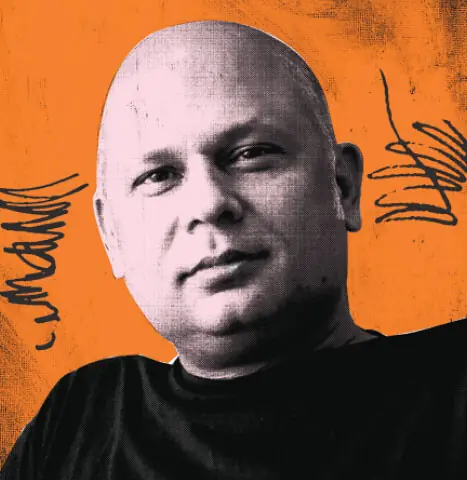
Film director, screenwriter and crime fiction author from India, Piyush Jha, who was on two panels, ‘Crime and Fiction: The World of Whodunnits’ and ‘Subjunctive Fictions: Stories We Invent about the World We Inhabit’, spoke about the “catharsis” provided by the “justice” at the end of a crime story. His novels are mostly Mumbai-based (Mumbaistan, Anti-Social Network, Raakshas: India’s No. 1 Serial Killer and many more) and “provide the possibility of a happy ending which doesn’t exist in real life”.
Several panels dwelled upon the inspiration behind fiction narratives
Jha spoke about how crime in India, and probably Pakistan too, largely goes unpunished, and it is something we feel “a strong sense of outrage about”. The justice at the end of a popular crime story offers a relief from real life injustices.
British-Pakistani writer Qaisra Shahraz — Jha’s fellow panellist along with writer Shehryar Fazli on the panel ‘Subjunctive Fiction’, moderated by Framji Minwalla, Chair of the Department of Social Sciences and Liberal Arts at the Institute of Business Administration, Karachi — spoke about the different phases of her writing: when she wrote about immigrant communities, when she wrote about Pakistan, and when her fiction was inspired by her travels. During all these phases, she was tackling her own environment or past, or people and stories she had come across in her travels.
Towards that end, she tries to get right the facts and the “feel” about the places where her stories are based. Shahraz, the author of the novels The Holy Woman, Revolt, Typhoon, as well as many short-stories, also acknowledged the challenges of writing about Pakistan as a British-Pakistani and not wanting to be seen as an outsider who is out of touch with the country she left as a child.
How is crime fiction influenced by the writer’s and readers’ environment? How does history influence the stories penned by writers? How does fiction respond to the world we live in? And does the world, in any way, respond to fiction?
Fazli, whose novel Invitation is based in 1970s Karachi, admitted that he did get wrong some of the details. What he found interesting, he said, was the reaction of some of his readers who were “very upset” by this. Karachi of almost five decades ago is still “a world people are very engaged with,” he concluded.
In the panel ‘The Past is a Foreign Country: How Does History Inform Fiction?’ authors and translators H.M. Naqvi, Pran Nevile and Shahnaz Aijazuddin discussed the dependency of fiction on history, and vice versa, with moderator Minwalla.
Naqvi started the discussion by arguing that the British keep writing about WWII to “make sense of the historical shock”. Similarly, the greats of Urdu fiction — Qurratulain Hyder, Abdullah Hussein, Saadat Hasan Manto — were engaged with the Partition of India. The reason there isn’t a great Pakistani historical novel in English is that “we have so much to contend with in the present”, he said; “who we are” is a question contemporary Pakistani authors are grappling with.
Nevile, who has written extensively on art and culture, and on Lahore and its history, argued that without history we cannot produce fiction. Many of his writings, he said, which are based on historical events, are fictionalised to make reading a more interesting experience.
Translator and columnist Aijazuddin, who has published a condensed version of Tilism-i-Hoshruba, said that the fantastical pre-colonial dastan can still be used to help us understand the world we are living in. Speaking about how a historical figure is taken as a basis for a fictional character, she told the audience that the protagonist of the dastan, Amir Hamza, was based on Prophet Muhammad’s (PBUH) uncle, Hazrat Hamza. “We are asked to accept a lot of fiction about the historical character”, she says, as Amir Hamza encounters many worldly and otherworldly adventures.
Minwalla noted that the three panellists agreed on the need for a “historical sensibility, and a sensibility of the time in which fiction is set”. As for how ‘fictional’ history can be, Nevile, using the example of Imtiaz Ali Taj’s play Anarkali, said that it stands in place of the historical account. What we think we know about Anarkali and accept as fact is what was portrayed in the play.
Naqvi pointed out that writing history in the subcontinent “is a fraught exercise” as our sense of identity and the rationale of the nation state is contingent on a certain reading of history. But one of the most interesting comments on the topic came from writer and dramatist Shahid Nadeem who categorically said that “the past is not a foreign country”; referring to the clash between the Mughal king Aurangzeb and his brother Dara, he said many of our conflicts are the same as they were hundreds of years ago, and that we are doomed to recommitting the same mistakes as the past does repeat itself.