The novel is a rare phenomenon in Sindhi literature. Writing in Sindhi being dominated by poetic forms, any publication of this genre invariably gets a frosty reception. In fact, this was the reason that Zaffar Junejo decided to publish a novel after more than 20 books to his name. And his debut in the world of fiction turned out to be a success story. For any work written in Sindhi to gain popularity — whether prose or poetry — there has to be a political angle to it; in this Junejo has touched the right chord.
Ujhammyo Baraan narrates the political odyssey of a generation that spent half of its life in struggle and the rest in regret. There is a plethora of writings available in Sindhi on this topic as the majority of writers and poets have been active in nationalist politics and faced the tyranny of dictatorships. I can recall the titles of at least two anthologies that are along the lines of “Torture Cell’s Poetry.” But Junejo takes a different path and narrates the stories of common prisoners who were put behind bars due to one reason or the other. Incidentally, the situations portrayed in the novel come across as so familiar that readers might find it hard to believe they are reading a work of fiction. In the foreword, Asif Farrukhi says, “this novel is a saga of fractured lives of Sindhi youth and tells how their ideals withered away in the wake of betrayal.”
An avid reader of English literature, Junejo is quite familiar with the art of storytelling. But unlike many other writers, his style of writing is not eclipsed by his extensive reading habits. Instead, he adopts his own style and narrates his story in a simple and beautiful way. Although there are scores of characters in this tale, the novel appears to be hinged on two main characters: a civil servant and a jailer. The former weaves a story out of confiscated letters, diaries and notebooks of the prisoners provided by the latter.
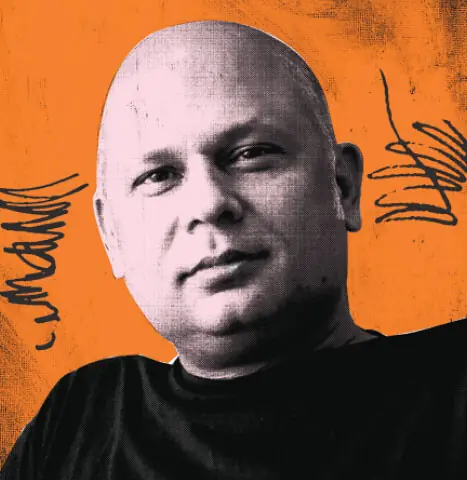
Zaffar Junejo pens down the largely unheard, painful story of a generation in Sindh that fought for its political beliefs
As the writer himself remained involved in politics, he vividly captures the zeitgeist of the last quarter of the previous century, when anarchy prevailed in Sindh. Zulfikar Ali Bhutto’s hanging and the end of communism in the USSR had devastated the political landscape of the province. The collapse of USSR put an end to ‘politics of ideology’ and gave rise to a new brand of politics in which there was no space for genuine political workers. This novel describes the plight of all such unfortunate activists.
A substantial part of the story is based on the University of Sindh and student politics of the time the narrative revolves around. Facts pertaining to how criminal elements crept into an otherwise ideology backed student movement are also given. Although Junejo has used fascinating language in the novel, some critics believe that he has failed to use student politics’ trademark jargon.
An avid reader of English literature, Junejo is quite familiar with the art of storytelling. But unlike many other writers, his style of writing is not eclipsed by his extensive reading habits. Instead, he adopts his own style and narrates his story in a simple and beautiful way. Although there are scores of characters in this tale, the novel appears to be hinged on two main characters: a civil servant and a jailer. The former weaves a story out of confiscated letters, diaries and notebooks of the prisoners provided by the latter.
Ironically, almost all the characters are unapologetic and do not seek any redemption. As the title of novel implies, they continue to suffer. Some regret why they abandoned their happy family life and wasted themselves in politics, others lament the friends who were actually working in cahoots with the enemy. Every character has his own story and share of sufferings.
Ujhammyo Baraan has created ripples in the stagnant waters of Sindhi prose. Incidentally, the day I finished reading this novel containing stories of political workers whose struggles for the rights of people went in vain, a conglomerate of parties named as Grand Democratic Alliance were making demands for non-democratic rule in the country. I wondered whether the tale of the novel has ended or not.
The reviewer is a civil servant.
Ujhammyo Baraan
(NOVEL)
By Zaffar Junejo
Kavita Publications, Hyderabad
270pp.
Published in Dawn, Books & Authors, August 7th, 2016