ISLAMABAD: In its anti-Pakistan rhetoric following Islamabad’s recent diplomatic effort to highlight the Kashmir issue, the government of Indian Prime Minister Narendra Modi has been whipping up ideas to scrap the Indus Waters Treaty (IWT) of 1960 to cause irreparable economic loss to the lower riparian.
While such a move could be labelled as a ‘hostile act’ and attract international criticism, India has the capability to increase the use of waters flowing into the Indus, Chenab and Jhelum rivers. It can also build more reservoirs in India-occupied Kashmir as a double-edge weapon.
Signed by President Ayub Khan and Prime Minister Jawaharlal Nehru in Sept 1960 and brokered by the World Bank, the treaty set bilateral principles of water sharing between the two nations. Under the provisions of the treaty that also survived the 1965 and 1971 wars, the waters of the eastern rivers — the Sutlej, Beas and Ravi — had been allocated to India and the western rivers — the Indus, Jhelum and Chenab — to Pakistan except for certain non-consumptive uses.
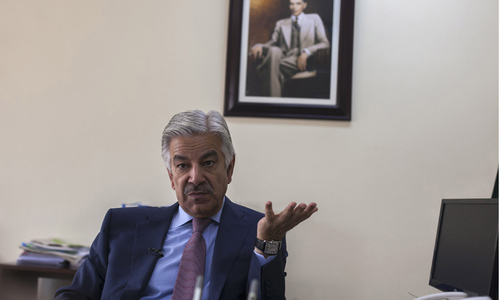
Dawn spoke to Ahmer Bilal Soofi, a former federal law minister, President Research Society of International Law and an advocate in the Supreme Court on the issue. Following is the Q&A of the session.

Q: Can India unilaterally revoke IWT?
A: India has no legal competence under the treaty to revoke it per se on its own. Article 12(4) of the treaty entitles the termination of the treaty only if both India and Pakistan agree in writing. In other words, a termination treaty has to be drafted by both states and then ratified by both, to bring the IWT to an end. The treaty has no provision for unilateral “suspension”. It is of an indefinite duration and was never intended to be time-specific or event-specific.
The IWT is not regime-specific — but rather state-specific. It will not expire with regime change. It is binding on both the states equally and offers no exit provision. Walking away from a treaty is in effect its breach. If India unilaterally stops following the treaty by giving any justification such as “revocation”, “suspension”, “withdrawal” or “annulment” etc. then it really means that it has decided to interrupt the water flow into Pakistan. In other words what India will call “revocation or withdrawal”, Pakistan will refer to as a “breach”.
Q: Is there any arbitration clause that can be set in motion should India go to that extreme?
A: There is an arbitration clause in the IWT. It is article IX and annexes F and G which contain detailed procedures about the taking of the grievance by either party under the IWT first to the commission, then to a neutral expert and later to the forum of arbitrators. Under the IWT, if India thinks that Pakistan’s conduct constitutes a dispute under article IX, then it must commence the procedure prescribed under Annexes F and G. India cannot itself conclude that Pakistan has breached the treaty on any grounds, including mistrust.
In case India “revokes” the treaty, it literally means it has shunned it. The dispute resolution mechanism under article IX and Annexes F and G of the IWT will be of no use and assistance to Pakistan.
It is limited to a dispute under the treaty and not meant to provide for specific performance of the treaty itself.
Since there is no provision in the IWT about its duration or suspension, there is no avenue that Pakistan can approach for “revival” of the treaty. Nor can Pakistan approach the International Court of Justice seeking specific performance to implement the treaty because of the Indian reservation given under IC J statute that bars filing of case by Pakistan against India.
In other words, Pakistan will not be left with any peaceful mechanism for seeking performance of the treaty by India.
Q: What if India stops Pakistani waters downstream and could this set a precedent for China upstream? Indian acts as a precedence for China?
A: Even if there were no IWT, an upper riparian, under the International Water Law, has no right to stop the water flow to a lower riparian. In case India tries to interrupt water flow into Pakistan as an upper riparian, it is setting up a regional state practice which under international law can serve as a precedence and equip China with an argument to consider suspension of the waters of Brahmaputra river.
India may have already damaged itself by even considering the suspension of water flow as an upper riparian and the Chinese government must be watching Indian moves with interest.
Q: How did IWT survive the 1965 and 1971 conflicts?
A: The treaty survived the two wars as well as other Pakistan-India conflicts because none of them were termed a war under international law. They were armed conflicts short of the legal status of “war”.
In the event of a war, states are entitled to suspend treaties, including diplomatic relations. In fact, if India considers revoking the treaty, it is itself signalling the same to be an act of war or a hostile act against Pakistan. This will equip Pakistan with the right under international law to take up any other coercive or non-coercive measure as an act of reprisal.
Treaties are state-specific obligations, and not regime- specific. These are not contingent upon deterioration of political atmosphere. It is much better that the states implement treaties through mutual trust, but even if there is deterioration of trust on account of extraneous events then that, per se, cannot be the sole reason to consider revocation of the treaty.
Published in Dawn, September 27th, 2016