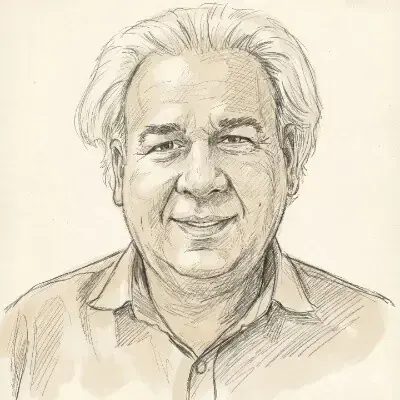
KARACHI: China may have more core benefits from the China Pakistan Economic Corridor (CPEC) but it’s a game-changer for Pakistan which will also benefit from it. Contrary to what some Europeans think, Pakistan has a strategic position in the region.
This was one of the main points raised by Dr Jean-Francois Di Meglio in his lecture on ‘The Economic, Strategic and Environmental Consequences of the New Silk Roads’ at the Area Study Centre for Europe (ASCE), University of Karachi, on Wednesday.
Dr Di Meglio, who is President, Asia Centre, France, said he was not an expert on CPEC so what he would talk about was based on his experiences. He said his talk was divided in two parts: Europe’s standpoint on the Silk Road project and China’s point of view.
Regarding the first part, Dr Di Meglio said when China announced the project in 2013, Europeans were doubtful about it. They thought since it was a 35-year project nothing could be achieved in the short term. They also thought that China was trying to rejuvenate something that used to exist in the past and there was no point doing it. Some people, however, harboured the notion that it was part of a grand plan. It was innovative because earlier the flow [of goods] was from West to East and now China was trying to reverse the direction of history.
Shedding light on what Silk Road used to be, Dr Di Meglio said in the late 20th century it was just a road but also entailed some key points and strategic places, one of which was the area crossing the border between Pakistan and Afghanistan. In modern history, he said, two significant events took place. The first was the Great Game between Russia and Britain at the end of the 19th century where Russia had accumulated wealth and wanted access to the sea; the other was the Afghanistan War that resulted in the disintegration of the USSR.
Dr Di Meglio said it was complicated for Europeans to talk about CPEC but countries like Germany and France had shown interest in it. With regard to negative feedback, some Central Asian countries were of the view that Russia was trying to re-establish links with China and the risk was that “China would be too much present”. But the Europeans discarded many important factors, he said.
On the Chinese approach to the situation Dr Di Meglio said [economic] reforms in China started in 1978 and after 35 years, in 2013, they came up with another project. If you looked at the dates, another 35 years added to 2013 would mean the arrival of the year 2048. In 2047 Hong Kong would come back to Chinese sovereignty fully; and 2049 would be the 100th anniversary of the People’s Republic of China. He said reforms brought in 1978 came through a simple process: enrichment. If the people were richer they would be easier to manage. The Silk Road had the potential of making some countries marginally richer. That could be done by building infrastructure and by linking them up with China.
Dr Di Meglio said CPEC was not an easy project but was not the most difficult to achieve either. There was room for Pakistani companies and politicians to take the initiative and speak to the Chinese for a level playing field as much as possible. Whosoever was going to benefit more from it, it was a game-changer for Pakistan. He argued that let’s say Pakistan was only benefiting 10 per cent from the project; even then you had other benefits like “influence” and “footprint”. He said some Europeans thought that Pakistan existed because there was a partition in 1947; they did not realise that Pakistan had an important strategic position.
On China’s ambitions, Dr Di Meglio said while it wanted prosperity and stability, it did not want domination in the region. China knew that in the past empires rose and fell. “The way to last long is not to dominate other countries but to play with them.”
Earlier, Director ASCE Prof Dr Uzma Shujaat delivered the welcome address.
Published in Dawn, December 22nd, 2016