Yesterday marked the 10th World Autism Awareness Day. The United Nations, which passed a unanimous resolution in 2007 designating April 2nd for autism awareness, had Autonomy and Self-Determination as this year’s theme.
One would expect that in this day and age, people would have a better idea of what autism is (or isn’t). But from activists, academics to parents, there is consensus that the situation is far from ideal and the world at large has failed to recognise the rights of people with autism.
We, the neurotypical (those who don't fall on the spectrum of autism) in psychiatric parlance, tend to see autistic people as inherently broken and abnormal. As a result, people with autism still fall outside of the basic human rights mentioned in the Universal Declaration of Human Rights, and therefore, fail to develop autonomy and self-determination.
According to a recent study conducted by the University of Cambridge, about 12% of the suicides in the UK involve people with a high probability of autism. Even in high and middle-income countries, many factors can be attributed for people with autism lacking the dignity and respect they deserve.
The most common reason is the general lack of support and early intervention for autistic children which makes them vulnerable to bullying, loneliness, and leaving school – and thus struggling in life.
The situation is worse in many developing countries, including Pakistan. Autism is a challenging condition but when combined with ignorance, myths, stigma, and dearth of professional medical expertise, it becomes a tragedy.
Two years ago, I wrote about my experience of raising a child with autism. The blog provided a rallying point for parents of children with autism, as they looked for guidance, moral support, and encouragement. But at the same time, it did not prevent them from falling into common pitfalls.
A culture where disability is a curse, parents seemed desperate to find solace in the thought that their child will become ‘normal’ once intervention starts.
The urge to remove the child’s disability was very strong. There seemed to be an assertion that by putting a child in an intervention program, the child ‘sheds’ autism and becomes indistinguishable from his regular peers.
American writer Steve Silberman, in his ground breaking book Neurotribes: The Legacy of Autism and How to Think Smarter About People Who Think Differently, dispels the need to shed autism. His basic premise is that people with autism should not be perceived as being deficient, but valued for their different ways of processing information.
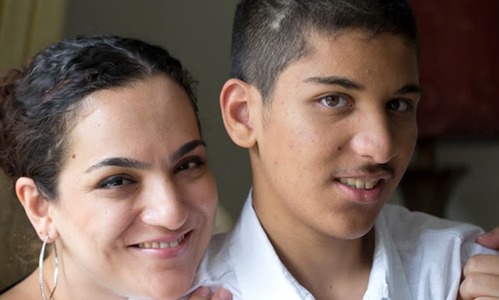
As a mother of an autistic child, I admit that in the beginning, I lacked the right conceptual tools to understand autism. Having spent a few years educating myself and researching into my child’s condition, I have completely shifted my approach.
I realised that the desire to make my child behave ‘normally’ was actually detrimental to his health and would hurt his chances of growing into an autonomous and self-determined individual. My unlearning and learning process has helped me dispel certain myths that I would like to share with you:
Myth 1: I am responsible for his autism
Some clinicians in the early 20th century saw mothers as the reason for their child’s autism. It is said that in 1943, when Dr. Kanner coined the Refrigerator mother theory linking autism in a child to the mother's cold behaviour toward the infant, many women welcomed the theory because of the implicit possibility that a change in their own behaviour might bring about a cure.
The thesis was long rejected by researchers, including by Kanner himself.
Myth 2: Children with autism have very little potential
Of all the features of autism, none is more widely admired than the fact that autistic children are remarkably talented. With proper attention, parents and caregivers can focus on the child’s strengths and help cultivate them. In fact in popular accounts of autism, an autistic person's savant skills like art, music, maths, memory, and attention to fine details have become quite known.
Myth 3: My child will not be able to lead a 'normal' adult life
Will he be able to work, marry, and have children? Should I be daunted by autism or should I face up to the challenge and try to create an environment where he can succeed in life? I think that by trying to do the latter, I have done more justice to my son.
Myth 4: Only the child needs to be trained
Medical journal Lancet published results of a breakthrough study in October, 2016 that can help bridge the communication gap – which is one of the main hurdles – between neurotypical people and those who have autism. The study showed how parents should be trained to pick up communication cues from their child at an early age so that improvements are made on several behavioural fronts.
Autism remains a profound and life-changing disability, but none of this changes the fact that autistic individuals deserve the same rights as all of us, and that an appropriate environment needs to be fostered whereby they can develop their skills and fulfill their potential.
Given the shortcomings and challenges, it will require dedicated work by parents, schools, employers, life partners and the community as a whole to reach that point. As someone who has an autistic child, I urge you all to play your part.
Are you living with a disability? Are you a family member, friend, or counsellor who is helping someone to cope with it? Tell us about it at blog@dawn.com