In the always difficult Pak-Afghan relationship, there are few certainties. However, this much is clear: when the two sides are not talking to each other, relations can only worsen.
Two high-profile Pakistani delegations to Afghanistan in the last week, therefore, have sent the right signal and, it is hoped, privately communicated a desire to urgently stabilise bilateral ties.
First, Chief of General Staff Gen Bilal Akbar led a military delegation to Kabul to condole the unprecedented loss of soldiers in the attack on a Mazar-i-Sharif army base. In addition to offering a symbolic gesture of medical treatment in Pakistan for the injured in the attack, talks were also held on border coordination measures between the two militaries — a key step in reducing bilateral tensions.
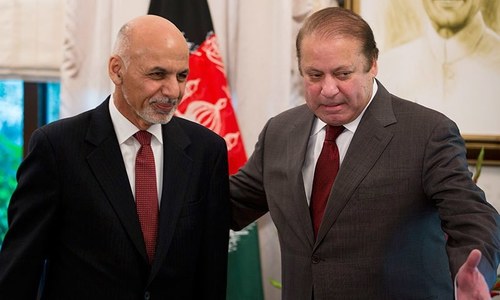
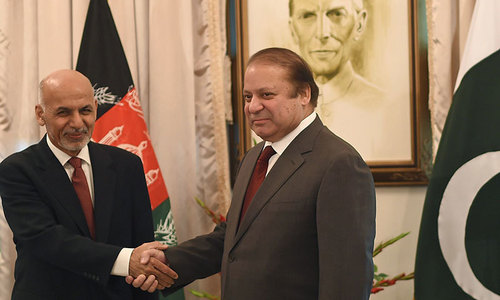
Then, a first by the Pakistani parliament as a delegation led by Speaker of the National Assembly Ayaz Sadiq visited Afghanistan for a range of high-level political meetings. In one of the meetings with the Pakistani parliamentarians, Afghan President Ashraf Ghani reiterated there was still space and time for regional peace, though he warned that time was running short.
The benefit of such delegations and meetings, even if they do not yield immediate benefits, are manifold. They open a door to dialogue and, at the very least, allow for a face-to-face discussion on issues.
Speaking through intermediaries and the media has the potential for further misunderstandings; what may be said in frankness and honesty may be interpreted by the other side as threatening. Moreover, after an unprecedented attack such as in Mazar-i-Sharif, a public and heartfelt gesture can help take the edge of some of the most strident criticism of the country.
The Afghan leadership should now announce reciprocal high-level visits. Since the Afghan government pulled out of the Saarc summit last November, there have been several further missed opportunities by the Afghan government. Not only has the senior leadership avoided meeting the Pakistanis, it has also appeared unnecessarily cool on efforts involving Pakistan to restart an intra-Afghan dialogue.
The recent revelations of the involvement of Indian and Afghan intelligence agencies with the banned TTP are particularly unfortunate and must be addressed by Afghanistan forthrightly. Kabul needs to publicly disavow any interference inside Pakistan, and take clear, identifiable steps to reduce the space for the TTP and other anti-Pakistan elements to operate from Afghanistan.
Ultimately, the Afghans themselves must find a way to strike peace inside Afghanistan among the various actors in the country. Pakistan, as a neighbour with publicly acknowledged security interests in a stable and peaceful Afghanistan, can play a vital role — but only through the Afghan government.
If the leadership of the Afghan state remains closed to dialogue, there is little Pakistan will be able to do.
Published in Dawn, May 2nd, 2017