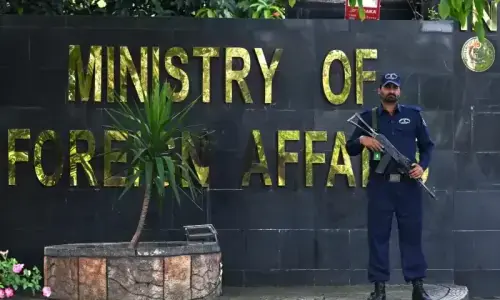
The Foreign Office hailed Pakistan’s admission in the Shanghai Cooperation Organisation (SCO) on Friday as “a historic occasion” and “an important foreign policy milestone”.
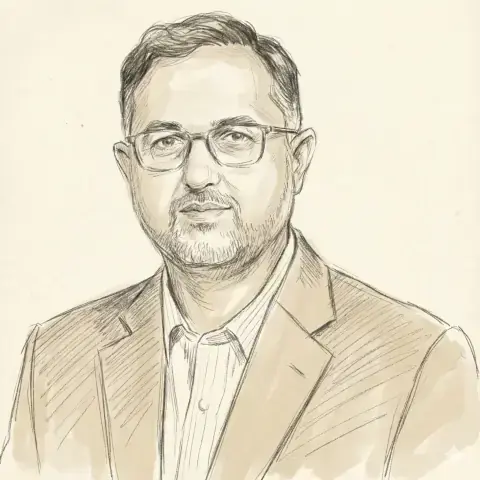
Pakistan’s former permanent representative to the United Nations in Geneva, Ambassador Zamir Akram, explains to Dawn the SCO’s evolution, its importance as a regional political and security bloc, and the significance of Pakistan’s membership. He also takes a look at how Pakistan-India disputes could affect the organisation.
Q: When was the SCO formed and what were its objectives?
A: The forerunner of the Shanghai Cooperation Organisation was the Shanghai-5, which was set up in 1996 and comprised China, Russia, Kazakhstan, Kyrgyzstan, and Tajikistan. Then when Uzbekistan joined in 2001 it became the SCO.
After the dissolution of the Soviet Union (in 1991) and emergence of the United States as the sole superpower, countries like Russia and China — the aspiring major powers — felt the need to engage and cooperate with each other to protect their interests, especially in Central Asia. The objectives of the SCO, therefore, are to protect political interests of the member countries and promote security, economic and trade cooperation between them. Over time with the emergence of a terrorist threat to these countries, counterterrorism has also become a key area for cooperation in the SCO. Another very important consideration for the SCO has been to promote regional connectivity.
Q: When and how did Pakistan first become associated with the SCO? What objectives would Pakistan like to achieve as a full member?
A: Pakistan, due to its close friendship with China and because of the emergence of independent states in Central Asia, has always been interested in promoting regional connectivity and itself as a pivotal state or as a bridge, especially for landlocked Central Asian states. Pakistan has been very much interested in projecting itself and its interests within the region. Therefore, Pakistan became an observer in the SCO in 2005.
From that time till Friday when we were admitted as a full member, it has been our endeavour to work in concert with this very important regional organisation, which represents the largest geographical bloc in the world and has also now become the biggest bloc in terms of population with the inclusion of Pakistan and India. Pakistan has acquired further importance because of the China-Pakistan Economic Corridor (CPEC). In that sense it is a tremendous achievement and also presents a big opportunity to Pakistan.
Q: Terrorism has been a major concern for the region, particularly after emergence of the militant Islamic State (IS) group. How far could the SCO be helpful in facilitating Pakistan in cooperating with other members in dealing with this threat?
A: President Vladimir Putin today in his statement recognised Pakistan’s role in counterterrorism. The Chinese also acknowledge that. In fact Pakistan, China, Russia and Iran are highly concerned about the emergence of IS in their neighbourhood. The SCO would provide a platform for all of us to work together. Moscow has hosted a regional conference on Afghanistan and it was also part of this effort. Pakistan wants to work with SCO partners for countering the terrorism threat in the region. Unfortunately, India talks about terrorism, but is involved in promoting terrorism in Pakistan by using Afghanistan’s territory, where they are supporting Tehreek-i-Taliban Pakistan (TTP) and funding terrorism in Balochistan. I expect that Prime Minister Nawaz Sharif would have raised this concern with SCO partners.
Q: Pakistan and India have assumed full membership of the SCO together. Would their confrontation weigh down SCO’s activities and impede the realisation of its objectives?
A: Pakistan will respect, as it has always respected, the mandate and parameters of organisations that it is part of. We will not use the SCO to find solution for disputes with India, just as we have not used Saarc or other regional forums to find solutions for disputes with India. There are of course other international organisations, the UN and its various organs, for instance. Moreover, we are ready to engage with India in a bilateral dialogue on those disputes.
However, what can happen is that with the SCO providing a platform for regional cooperation and connectivity, it can contribute to better relations between Pakistan and India. If that happens, it will improve the prospects for resolution of our bilateral issues as well. Unfortunately, India does not look at the SCO in that context. Prime Minister Narendra Modi’s statement at the SCO today illustrates that. He used the platform to castigate Pakistan. On one hand, they say disputes with Pakistan are not international or multilateral, but then they use multilateral forums for raising bilateral complaints. India should realise that if it wants peace with Pakistan, the SCO provides a platform for achieving that.
Published in Dawn, June 10th, 2017