In Dr Shahab Ahmed’s own words, the main difficulty in conceptualising Islam/Islamic lies in the prolific scale of contradiction between the ideas, values and practices that claim affiliation with this religion. Therefore, it is a challenge to locate the coherence of an internally contradictory phenomenon.
Ahmed employs all his physical and intellectual prowess, and the knowledge, experience, wisdom and talent at his disposal, to negotiate a convergence between the two conflicting ideas of coherence and contradiction in Islam. What is Islam? with the subtitle, The Importance of Being Islamic, is an exceptionally thorough and inclusionary work on the subject. It was published posthumously last year by Princeton University Press. Ahmed fell ill during the course of finishing this book and died soon after. He was just 48 when he passed away in the autumn of 2015.
What is Islam? is incomparable to most other contemporary works on Islam because instead of positioning himself within the current global political condition, as others would, Ahmed uses that condition only as a distant backdrop to his intimate analysis of the subject.
Of course, the questions he poses will remain relevant for academic purposes forever, but the need to answer these questions is the demand that his present has inflicted upon him. Therefore, one could see that Ahmed feels a sense of anxiety and a need to respond to large quarters of opinion-makers within the West who tend to impose a unity on the plenitude and complexity of a large human and historical phenomenon such as Islam. But his responses are not hinged in the politics of today.
Ahmed draws heavily upon basic sources as well as the analytical tools available to him from philosophy, literary criticism, hermeneutics, history, culture, and anthropology to develop a conceptual means that helps recognise “all forms and tokens, and calibrations and expressions that are Islam”, from art and civilisation to political theory and law.
Ahmed’s scholarship is daunting in trying to texture the evidence he provides for his hypothesis. But his hypothesis — or the central idea that he presents, establishes, explains and promotes — is somewhat simple to me as an ordinary reader. It is to determine that there is an inherent cosmopolitanism and plurality, diversity of thought and range of practice, in his faith and in his community. His very dedication of the book to the cosmopolitanism of his parents and the cosmopolitanism of their Islam reveals his intent at the outset. His referring in the book to some of his friends who supported him in translations from various languages as “brothers-in-Islam” also demonstrates his deep association with his familial and communal roots while being fully integrated into a Western society — as he was.
While I can appreciate the enormous effort made by Ahmed and the remarkably educative compendium of history and ideas that he has produced, I must accept that an in-depth scholarly critique of this subject is not my forte. What bothers me, however, is that Ahmed’s assertions underplay the overbearing agency of a dominant narrative of faith in any certain age.
With all its diversity and plurality, complexity and contradiction — which perhaps holds true for any transcontinental religion or even political philosophy — there is a certain ideology that has anchored itself in Islam which is most forceful in our times. When we deal with the past, varying views of the world and divergent interpretations of phenomena that existed can be taken to be at par with each other. But in dealing with the present, Ahmed’s description of Muslims as people — many of whom pursue intellectual endeavours, scientific inquiry and higher forms of art — explains little. We cannot overlook the fact that there is legitimacy for violence and a desire to overpower others, including their own minority sects, among a section of Muslim populations. Theirs is the dominant narrative of today.
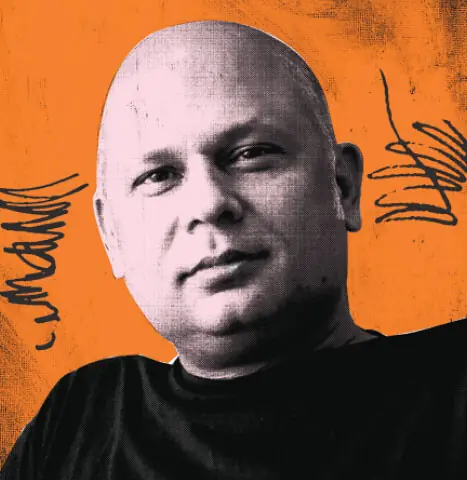
The writer is a poet and essayist based in Islamabad. His collection of essays Crimson Papers: Reflections on Struggle, Suffering, and Creativity in Pakistan was recently published by Oxford University Press
Published in Dawn, Books & Authors, June 11th, 2017