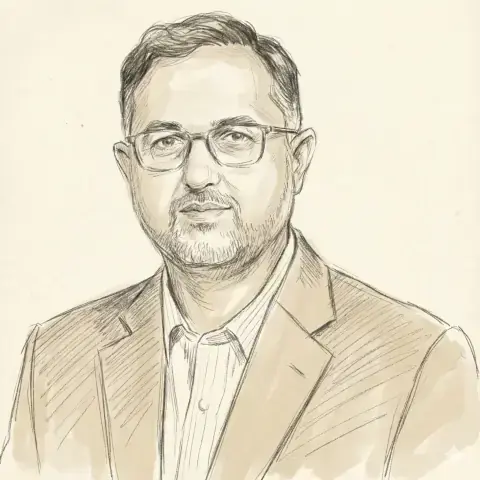
ISLAMABAD: Pakistan’s High Commissioner to India Sohail Mahmood returned to New Delhi on Thursday after Indian authorities partially addressed Pakistan’s concerns about harassment of its diplomats and their families.
Mr Mahmood crossed the border by road and then took a flight from Amritsar to Delhi. He would be hosting the high commission’s Pakistan Day reception on Friday (today).
The high commissioner was recalled last week “for consultations” as a mark of protest over multiple incidents of harassment of diplomats and their families in India.
A diplomatic source said the frequency of harassment incidents had declined significantly. “The diplomats from the Foreign Service are no more being bullied, but diplomats from other branches of government are still being harassed,” the source said.
FO says US is taking action against terrorists hiding inside Afghanistan including Fazlullah
He revealed that a couple of days back the defence adviser, who is a serving armed forces officer, was stopped and harassed for almost half an hour.
The incidents of harassment of Pakistani diplomats were initially believed to be linked to the row over Indian High Commissioner to Pakistan Ajay Bisaria’s Islamabad Club membership. However, it has now transpired that Indian intelligence agents started intimidating Pakistani diplomats because of Pakistani law enforcement agencies’ insistence on security clearance for the labourers working on the Indian high commission’s residential project in the Diplomatic Enclave.
The labourers had been hired by the high commission’s Pakistani contractor without obtaining their security clearance. The stance of Pakistani security agencies was that they needed to be screened because they were working inside the Diplomatic Enclave and they could pose threats to other diplomatic missions.
Indians misunderstood the Pakistani agencies’ stance and took it as a coercive step against the high commission. The ugly situation resulted because of absence of normal communication channels between the two countries.
“Pakistan is a responsible member of the international community and we make all possible efforts to ensure the safety and security of the diplomats stationed in Islamabad,” Foreign Office spokesman Dr Muhammad Faisal said at the weekly media briefing.
Meanwhile, he said, “India has not shared any evidence with us about their complaints”.
In a reference to Indian media articles claiming that India had issued at least 15 ‘note verbales’ over harassment of its diplomats in Pakistan, Dr Faisal said: “We don’t want to enter into a numbers game of Notes Verbale, with India, regardless of the fact that the numbers on our side are much more.”
Tense relations between the two countries have affected the traffic of pilgrims between them. India did not issue visas to 503 Pakistani pilgrims intending to participate in the Urs of Khawaja Moinuddin Chishti at Ajmer Sharif from March 19 to 29.
Earlier, another group of 192 Pakistani pilgrims could not participate in the Urs of Hazrat Nizamuddin Aulia in Delhi from Jan 1 to 8, due to the same reason.
Dr Faisal expressed disappointment over the Indian attitude and recalled that the visit of the pilgrims was governed by the 1974 Pakistan-India Protocol on visits to religious shrines and was an annual feature.
Last year Sikh pilgrims from India could not participate in the anniversaries of Guru Arjan Dev and Maharaja Ranjit Singh due to Indian intransigence. Similarly, last month the Indian government forced 173 Katas Raj pilgrims to withdraw their applications from the Pakistan High Commission in New Delhi on the pretext of non-issuance of necessary clearance by the Ministry of External Affairs of India.
PM’s visit to US
At the briefing, the FO spokesman belatedly shed light on Prime Minister Shahid Khaqan Abbasi’s meeting with US Vice President Mike Pence during his private visit. The meeting looked to be a secret one from the manner it was held.
Pence’s office had soon after the meeting issued a media statement about the interaction which said that Mr Abbasi had been told that “Pakistan must do more to address the continued presence of the Taliban, Haqqani network, and other terrorist groups operating in their country”.
Dr Faisal explained: “The meeting provided an opportunity to exchange views on bilateral relations, the regional situation and Afghanistan and is part of the regular interactions between the two countries. These conversations are important to build trust and cooperation and to strengthen bilateral relations.”
Denying that PM Abbasi went alone for the meeting, the spokesman said he was accompanied by the defence adviser at the Pakistan Embassy in Washington.
The spokesman in a major shift acknowledged that the US was addressing Pakistan’s concerns about terrorist sanctuaries on Afghan soil. “It is a matter of satisfaction that the US is taking action against the terrorists hiding inside Afghanistan, including Fazlullah, who have committed acts of terrorism across Pakistan. More needs to be done,” he said.
Earlier this month, the US fired two missiles from its drones on camps of Pakistani terrorists in Afghanistan’s Kunar province, killing 21 of them. Abdullah, son of the Tehreek-i-Taliban Pakistan chief Fazlullah, was among the dead.
The FO spokesman said: “On our part, Pakistan will continue to support efforts for bringing peace in Afghanistan.”
Published in Dawn, March 23rd, 2018