Allama Muhammad Iqbal and his times influenced the Urdu poetic tradition in a unique way, although the great poets we had before him were equally insightful and wise, if not more. A section of Iqbal’s critics also argues that a few of his predecessors, such as Mir Taqi Mir and Mirza Asadullah Khan Ghalib, had greater aesthetic appeal and understood the needs and nuances of poetic expression better than Iqbal. Also, some of these poets must have kept themselves abreast with the prevalent disciplines of knowledge in their times. Nevertheless, it was Iqbal who was the first to be recognised both as an established poet and a formidable scholar.
Just as everyone is a product of their age, so was Iqbal. But his personal agency and contribution in impacting the world of Urdu letters cannot be undermined. Iqbal and his age transformed Urdu literature in such a way that erudition and scholarship within the literary genres — even going beyond the Urdu and Persian tradition — and across various disciplines became prerequisites for any major poet or writer, both in terms of having a theoretical understanding of literature as a whole and to be able to produce a work of considerable merit. The demands are much higher for a contemporary work of art to resonate with the modern, elevated and better informed reader.
However, there is a contrary view offered to the one stated above. I recall Qamar Jameel, the modernist poet and critic and one of the pioneers of prose poetry in Urdu, once confessing that the depth and expanse of his study limited his ability to create better and more. Munir Niazi shared the same feeling after getting older and said that if he read more, he would concentrate less on composing verse. This may well be true for some of our significant poets, but if we look at the leading Urdu poets after Iqbal — from Miraji and Noon Meem Rashid to Majeed Amjad and Faiz Ahmed Faiz — they were all multilingual with a deep understanding of theory and contemporary disciplines of study. Likewise, in prose — from Saadat Hasan Manto and Qurratulain Hyder to Shamsur Rahman Faruqi and Mohammad Saleem-ur-Rahman — somehow the most important writers happen to be erudite. But, to be candid, most Urdu poets and writers in the past as well as in the present have a limited understanding of the larger picture and a smaller creative talent.
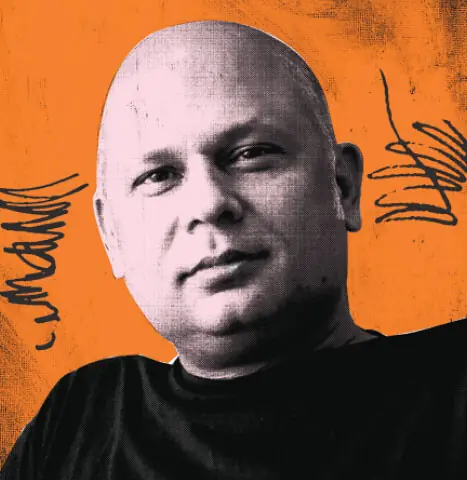
Therefore, while the majority of our poets and writers is constituted of those who have restricted knowledge and creativity, there are some who are great scholars but fall short of creating major works of art. Apparently the reason is that their grasp of various subjects and understanding of theory hinders the freshness and extemporariness which underwrite aesthetic appeal. Finally, we have those who have theory and knowledge enhancing and enriching their creative spirit. The aesthete in them learns and extracts from what they accumulate without compromising the fundamental demands of poetic expression. They are always the fewest in numbers. From among the not-so-new but still fresh crop of contemporary poets, we have Akhtar Usman; one of the few who clearly fall in this final category.
Usman has a rich oeuvre in terms of genres as well as themes whose breadth is largely incomparable to that of most of his peers. This is partly because of his command over multiple languages and their traditions, something which is increasingly rare in present times. His depth of appreciation for Persian literature reflects in his Urdu verse without an overbearing Persianised diction. Besides, he has written in Persian and English on its own. His collections of Persian ghazals and English poems are under publication. In addition to his own poetry in Urdu, he has done compilations of, and translations from, classical Persian verse such as that of Mir Taqi Mir and Omar Khayyam as well as Urdu renditions of poetry from other international languages. He has also penned some of the most riveting elegies of Karbala.
Most Urdu poets and writers have a limited understanding of the larger picture and a smaller creative talent.
My own interest in the genre of contemporary Urdu nazm draws me closer to Usman’s collection Sitara Saaz [Star-maker]. The book has run into multiple editions, the latest one coming out just recently. Through these 32 long and short poems, Usman explores a universe that is as much inside his personal being as it is outside. He uses nature, colours, seasons, parts of the day and night, sound and light, transitory moods and lasting feelings to find and present what is contained in the cup of life — which is at times still and at times effervescent. Another uniqueness he brings is a profound sense of the loss of our times going side by side with a welcome acceptance of gains that will be made from any new age that arrives.
He says: “Hawa zinda hai/ rafta, aainda, donon mein raqsanda hai [The wind gusts/ dances along the times gone by and the times yet to come]. Life is undulating, but that in itself does not keep us away from extracting pleasures from its throes, to then celebrate what we experience and achieve. His longer poems, in multiple parts, cast a durable impression. Particularly ‘Zarnab’ [Pure Gold], ‘Shash Jihat’ [Six Dimensions] and ‘Naee Sadi Se’ [To the New Century] blend the sorrows of a creative soul conscious of its existence with sorrows of the world around. The poems flow like a river that is quiet at the surface and agitated in its depths.
Usman’s composure comes from a depth of knowledge of human history and civilisation and the anxiety that he holds inside brews constantly in his artistic soul. His work reminds me of an Urdu poem by Iftikhar Arif titled in Arabic after a Hadith: ‘Al Ilmo Hijab-ul-Akbar’ [Knowledge is the Greatest Veil]. Its last line reads: “Hijab-i-Akbar uthay to sirr-i-wujood kholein” [Once the greatest veil is lifted, we will be able to unravel the enigma of being]. At a deeper level, Usman is also a demanding poet whose reader has to be intelligent and sensitive enough to lift the veil of his craft kneaded in erudition to rejoice in the mysteries his verse offers.
The writer is a poet and essayist based in Islamabad. His new collection of verse No Fortunes to Tell is forthcoming
Published in Dawn, Books & Authors, January 20th, 2019