Taliban hit army base, kill 26 troops: Afghan officials


The Taliban launched a pre-dawn attack on an army base in northern Afghanistan on Tuesday, killing 26 members of the security forces, a provincial official said, the latest brazen assault by insurgents amid stepped-up efforts to resolve the country's protracted war.
The raid on the base in northern Kunduz province came as representatives of the Taliban were to hold meetings in Moscow with prominent Afghan figures, including former President Hamid Karzai, opposition le, ders and tribal elders but not Kabul government officials.
The insurgents have refused to negotiate with Ghani's government, calling it a US puppet. The Taliban have been staging near-daily attacks, inflicting heavy casualties on the embattled Afghan army and security forces. Both sides in the conflict say they want to strike hard militarily to bolster their position at the negotiating table.
In the Kunduz attack, the Taliban stormed the base, located on the outskirts of the provincial capital, Kunduz city, around 2am, said Mohammad Yusouf Ayubi, head of the provincial council. There were at least 23 soldiers and three members of the local police force among those slain.
According to Ayubi, 12 troops were wounded in the Taliban onslaught, which lasted for over two hours until reinforcements arrived at the besieged base and the attackers were repelled.
“Day by day, the security situation is getting worse in and around Kunduz city,” said Ayubi, adding there are fears the city could again fall into the hands of the Taliban as it did briefly on two occasions in recent years in September 2015 and in October 2016.
Taliban spokesman Zabihullah Mujahid issued a statement to the media saying the Taliban were behind the Kunduz attack, claiming the insurgents had overrun three police checkpoints as the attack unfolded.
Earlier on Tuesday, Afghan officials reported two more Taliban attacks that left 21 people dead, including 11 policemen killed when the insurgents stormed a checkpoint in northern Baghlan province's Baghlani Markazi district.
The checkpoint attack in Baghlan took place on Monday night and triggered a firefight that lasted for almost two hours, said Safder Mohsini, head of the provincial council. Five policemen were also wounded and the Taliban seized all weapons and ammunition from the checkpoint before reinforcements arrived, he said.
“They arrived there late, fought back and managed to get the checkpoint under control,” he added.
Earlier on Monday, the Taliban targeted a local pro-government militia in a village in northern Samangan province, killing 10 people there, including a woman, said Sediq Azizi, the provincial governor's spokesman. Four people were also wounded in that attack, in Dara-I Suf district, he said.
According to Azizi, the Taliban targeted local villagers, including women and children. As the area is very remote, the villagers have their own militia to defend their homes from the insurgents.
The Taliban claimed both Baghlan and Samangan attacks.
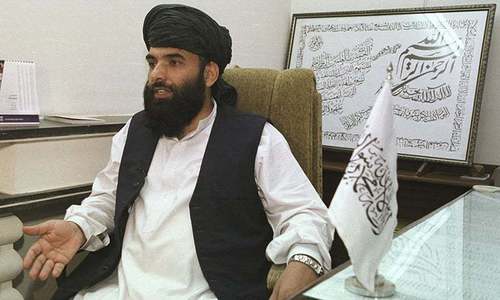
Far from the Afghan warzone, a two-day meeting in the Russian capital between the Taliban and Afghan figures, which started Tuesday, is seen as another step in a process aimed at resolving the 17-year war.
That process has accelerated since the appointment last September of US peace envoy Zalmay Khalilzad.
But the meeting has sidelined Afghan President Ashraf Ghani's government, which has criticized the gathering.
Abdullah Abdullah, the country's chief executive, said Monday that the Afghan government should be at the center of any peace talks, adding that Kabul “would prefer the Moscow meeting had a different shape.”
Still, Fawzia Koofi, a lawmaker and women's rights activist, said her participation in the talks was a good first step, even though she was one of only two women among the more than 20 Afghan figures who traveled from Kabul to Russia.
“It is an imbalance, but we want to participate in every single meeting and face the Taliban, and the Taliban should have the courage to face the women of Afghanistan,” she said at the outset of the talks.