Power tariff to be gradually increased by over Rs2 per unit: minister


ISLAMABAD: The government announced on Tuesday that electricity tariff would be gradually increased by Rs2.25-2.50 per unit in three phases and circular debt would be brought down to Rs250 billion by the end of December.
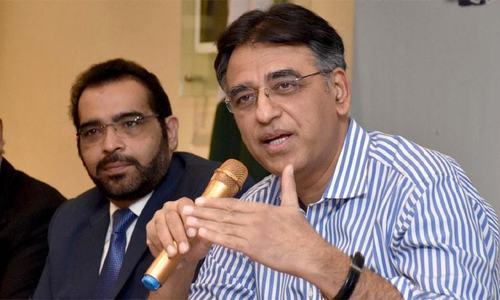
Speaking at a press conference, Minister for Power Omar Ayub Khan said the first increase of about Rs1 per unit or so would come into force over the next two to three months. The remaining increase would follow in about two quarters.
Take a look: How to make electricity cheaper
Replying to a question on conflict of interest because of appointment of Nadeem Babar as head of the prime minister’s task force on energy sector as he is a key player among the independent power producers, the minister said while Mr Babar was a professional, it was the responsibility of the power minister and the power secretary as principal accounting officers to filter whatever proposals came forward. “The buck stops at me as the power minister,” Mr Khan said, adding that Mr Babar had no executive role.
He said the previous government had delayed notification of tariff determined by the National Electric Power Regulatory Authority (Nepra) because of its electoral compulsions. Nepra had determined the power tariff increase of Rs3.66 per unit, but it was not passed on and, as a result, the circular debt ballooned to worrisome level, he said. “It was not passed on to get political gains and left for the next government to face the brunt.”
The minister said the present government had rationalised the tariff by increasing on average Rs1.27 per unit instead of Rs3.66 per unit.
He said there was Rs200bn of capacity payment for two quarterly adjustments as per Nepra determination that was still overdue but the government did not charge it from the public. Now the government would charge it from consumers and it will be charged in installments.
He alleged that the previous government had also allowed full power supply to high loss areas to win votes. “Currently, the circular debt is at Rs803bn and we would bring it down to Rs250bn by the end of December,” the minister said. “We are also going to issue a second round of Rs200bn Sukuk bonds.”
He said the government had now improved the distribution companies’ recoveries and increased it by Rs40bn during last three months, after taking strict actions against power theft. “We are going to further improve the recoveries of these Discos.” He added.
Asked whether the government would continue load management in coming summers, the minister said loadshedding would be generally very minimal but high loss feeders would face maximum load management.
Besides, 600 megawatts would be added to the national grid from renewable resources in near future, he added.
He said the government was working on a new renewable energy policy which would be finalised by next month. “We are targeting to increase share of renewable in our energy mix to 20 per cent by 2025 and then to 30pc by 2030. While adding 30pc share of hydel sources, it would reach up to 60pc. “This would reduce power cost and our dependence on imported fuel and expenditure on its import for power generation,” Mr Khan said.
He said the government was working on solarisation of 29,000 agriculture tubewells to get rid of huge subsidies being provided by the federal and provincial governments.
Published in Dawn, March 27th, 2019