India bans key highway in occupied Kashmir for civilians for 2 days a week


Authorities in Indian-occupied Kashmir on Sunday began enforcing a ban on the movement of civilian vehicles for two days a week on a key highway to keep it open exclusively for military and paramilitary convoys.
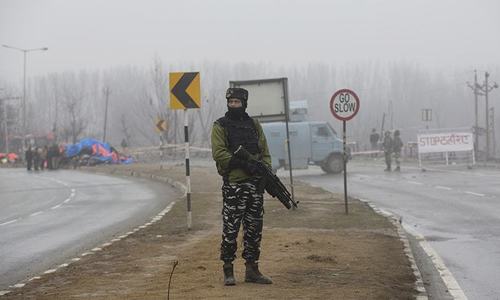
Soldiers patrolled the highway and erected barricades by steel and razor wire at intersections with neighbourhood roads. India's government issued the order this past week, reserving the 270-kilometre stretch of the highway for the movement of government forces vehicles on Sundays and Wednesdays until the end of May.
The order follows the February 14 suicide bombing of a paramilitary convoy that killed 40 soldiers and brought India and Pakistan to the brink of war. Civilian traffic was already being disallowed along the highway during the movement of troops' convoys after the attack.
Also read: Roadblocks hold up patients in India-held Kashmir
The order said the ban was called to prevent any attacks by anti-India fighters “keeping in view the large movement of security forces on the national highway” during India's multi-phase general election, which begins on Thursday.
The highway is the only one connecting the restive Kashmir Valley in the Himalayas to the Indian plains, and a large part of it passes through mountains and forests. The road is currently being widened into a four-lane highway and is prone to frequent closure during winters and bad weather.
The ban has evoked sharp criticism from politicians, businessmen and common residents in the disputed territory.
“Last I checked, we were a democracy. But this sounds like a diktat of Martial Law,” Indian-occupied Kashmir's former chief minister Mehbooba Mufti, an ally of Prime Minister Narendra Modi, wrote on Twitter.
“After bringing Kashmir to the brink, the administration is adamant on ensuring collective punishment for Kashmiris.”
Kashmiris have been fighting Indian control of the region since 1989. Most Kashmiris support the demand that the territory be united either under Pakistani rule or as an independent country, while also participating in civilian street protests against Indian rule.
The anti-India unrest grew after a popular rebel leader was killed in 2016. India's government responded with stepped-up operations, leading to more protests.
About 70,000 people have been killed in the uprising and the ensuing Indian crackdown since 1989.