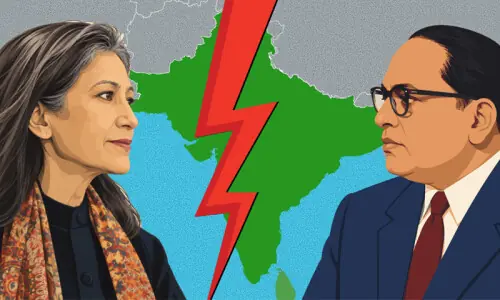
As Hindutva nationalism strengthens its grip, so does anti-Pakistan sentiment in India’s politics. Interestingly, whereas anti-Pakistan rhetoric has always been a prominent part of Indian politics, anti-India sentiment in Pakistan’s electoral politics has been rather irregular. Indeed, animosity against India was understandably present during the early years of Pakistan’s existence. But if one goes through the published speeches and statements of Pakistani heads of state and government between 1948 and 2018, one can deduce that anti-India rhetoric only spiked during the four Indo-Pak wars in 1948, 1965, 1971 and 1999 (Kargil). Otherwise, India as an enemy was hardly mentioned as an issue during the campaigning of the 10 parliamentary elections that have taken place in Pakistan since 1970.
On the other hand, if one repeats the exercise of going through the speeches and statements of Indian political leaders, especially after 1965, one can see that the ‘anti-Pakistan card’ was often used during elections in India. This card’s usage has intensified with the rise of Hindutva in India from the late 1980s onward — especially during the ascent of the Bharatiya Janata Party (BJP) in the 1990s.
The internal spillover of the anti-Pakistan/India rhetoric in both the countries often constitutes accusations of treachery against those who are perceived to be not toeing the line in this context. The fact is that labels such as ‘Pakistani/Indian agent’ are largely used to attack political opponents. Such accusations seem to get instant traction from the polities of both countries. However, the frequency of such vocal antics is still lower in Pakistan than it is in India. In fact, in Modi’s India, the antics in this respect seem to have become pandemic. This is mainly because the BJP government and India’s rather brash electronic media have not hesitated to label even some popular showbiz and sporting personalities as being ‘pro-Pakistan.’ These include veteran film actors Naseeruddin Shah, the late Om Puri, Salman Khan and former Indian Test cricketer-turned-politician Navjot Sidhu.
Anti-Pakistan rhetoric in India has a long history. Among the first people it ensnared was Bollywood superstar Dilip Kumar
Yet, what is happening in India today is not a new phenomenon as such. Famous Indian showbiz stars have been accused of being Pakistani agents long before the intensification of Hindutva politics in India. The first such case emerged in the early 1960s and involved the former Bollywood star and heart-throb Dilip Kumar. His real name was Yusuf Khan and he was born in 1922 in Peshawar into a relatively well-to-do Muslim family.
Yusuf settled in India when Peshawar became part of Pakistan in 1947. In his 2018 book Neta Abhineta, Indian author and journalist Rasheed Kidwai writes that, as a young man, Yusuf was highly impressed by the leader of the Indian National Congress party, Jawaharlal Nehru. Kidwai also writes that, in 1943, when Yusuf was trying to carve a path for himself as an actor, the owner of Bombay Talkies Studios, Devika Rani, advised him to change his name to Dilip Kumar. She told him that it would thus be easy for him to get work as an actor.
In his 2014 autobiography, The Substance and the Shadow, Dilip Kumar remembered being “left speechless for a moment” by the advice. Even though initially he was reluctant to change his name, he finally agreed. Kumar started to act in Hindi films in 1944. But it was between 1947 and 1964 that he rose to become India’s leading actor and star. Kidwai notes that this was also the period during which Nehru was thrice elected as prime minister. Nehru — the scion and main architect of ‘Indian secularism’ — became Kumar’s fan and then a close friend.
In 1961, Kumar financed and acted in a big-budgeted film called Ganga Jumna. The film’s release was blocked by the Indian film censor board. The reason given was that Kumar’s character in the film says “Haye Ram”[Oh god] just before his death. Journalist V. Sanghvi, in a 1999 article for The Telegraph, writes that the board wanted Kumar to remove the scene. When Kumar asked why, he was told that these were the words spoken by Mahatma Gandhi just before his violent demise at the hands of a Hindu fanatic. Sanghvi adds that, on Kumar’s insistence that any Hindu could say these words, the board members told him “Yes, any Hindu would…” And Kumar wasn’t one.
A perturbed Kumar contacted his friend PM Nehru and requested him to intervene. Nehru did and almost immediately the film was given the green signal by the censor board. However, Kidwai wrote that, soon after the film’s release, a police team from Kolkata arrived in Mumbai and conducted a surprise raid on Kumar’s house. The actor was accused of being a “Pakistani spy.” According to the police, it had arrested a suspected Pakistani spy and found names of various Indian celebrities in his diary. Nehru was still PM but the police were allowed to investigate.
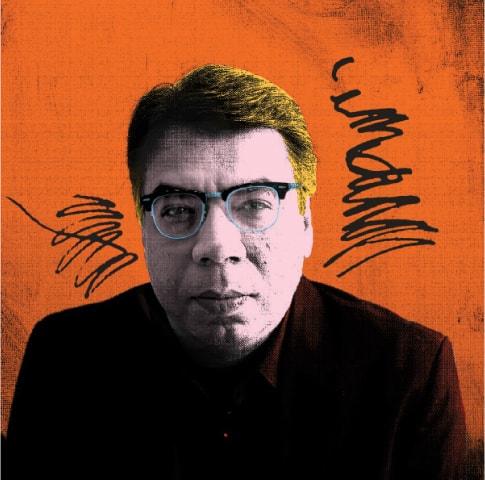
The investigation lasted for several months. During this period some Indian tabloids claimed that Kumar had confessed to being a Pakistani spy. It was all hogwash, of course. The case was finally dropped when the police failed to find any concrete evidence. Ironically, Kumar had also befriended Bal Thackeray, a famous political cartoonist who, in 1966, founded the right-wing Hindu nationalist outfit, the Shiv Sena. In his autobiography, Kumar writes that there was nothing political about their friendship and that Thackeray was a fan of his and he was a fan of his cartoons.
Thirty-seven years after Kumar was first accused of being a Pakistani spy, he was again accused of lacking patriotism for India. In 1998, the government of Nawaz Sharif announced that Kumar would be invited to Pakistan and given the country’s highest award, the Nishan-i-Imtiaz. The award was to be given for his work to bring peace between India and Pakistan. Kumar agreed to travel to Pakistan. This saw his good friend Thackeray fly off the handle and demand that then PM Atal Bihari Vajpayee (of BJP) stop Kumar from travelling to Pakistan. Vajpayee did no such thing and Kumar landed in Pakistan to receive the award.
Thackeray, whose party was an ally of Vajpayee’s regime, told a newspaper, “Why is Kumar being given this award? Is it for his services for the Pakistani state that we do not know about?”
In 1999, when India and Pakistan went to war in Kargil, Thackeray demanded that Kumar return the award. Nevertheless, as tensions eased between the two countries, Thackeray’s wife brokered a peace between the two men and they became friends again. Now 96 years old, Kumar has been spared the latest and perhaps the most belligerent round of accusations (of being pro-Pakistan) that have engulfed India’s celebrity circles.
Published in Dawn, EOS, April 14th, 2019