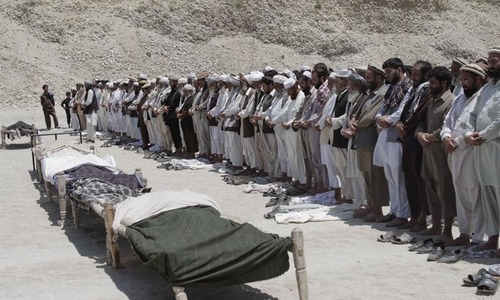
UN reports increase in civilian deaths in US, Afghan operations


WASHINGTON: In the first quarter of 2019, US and Afghan forces killed more civilians in Afghanistan than Taliban did, says a UN report released on Wednesday.
The UN Assistance Mission in Afghanistan (UNAMA), however, reported that this year’s casualties were the lowest for a first quarter since 2013. Overall, civilian casualties decreased by 23 per cent as compared to the same period last year.
Read: Civilian deaths in Afghan war hit record in 2018: UN
From Jan 1 to March 31, the UNAMA documented 1,773 civilian casualties — 581 deaths and 1,192 injured. These included 582 child casualties as well — 150 deaths and 432 injured. The report claimed that “civilian deaths attributed to pro-government forces surpassed those attributed to anti-government elements during the first quarter of 2019”.
The UNAMA said it was “very concerned” by the continued targeting of civilians and increase in civilian casualties from the use of non-suicide devices by anti-government elements. It also reported a significant increase in civilian casualties from aerial and search operations, which “drove an overall increase in civilian casualties by pro-government forces”.
The data showed that ground engagements were the leading cause of civilian casualties, causing approximately one- third of the total. A single mortar attack incident by Daesh/Islamic State Khorasan Province (ISKP) on March 7 in Kabul caused approximately one-fifth of all civilian casualties from ground engagements.
The use of improvised explosive devices (IEDs) was the second leading cause of civilian casualties. Contrary to 2017 and 2018 trends, the majority of IED-related civilian casualties were caused by non- suicide IEDs. Aerial operations were the leading cause of civilian deaths and the third leading cause of civilian casualties, followed by targeted killings and explosive remnants of war. Civilians living in Kabul were the most affected followed by those living in Helmand, Nangarhar, Faryab and Kunduz provinces.
The report pointed out that both pro- and anti-government forces were using armed attacks to gain leverage in the US-Taliban peace talks in Doha, Qatar.
Published in Dawn, April 25th, 2019