US bars Turkey from F-35 programme over Russian missiles
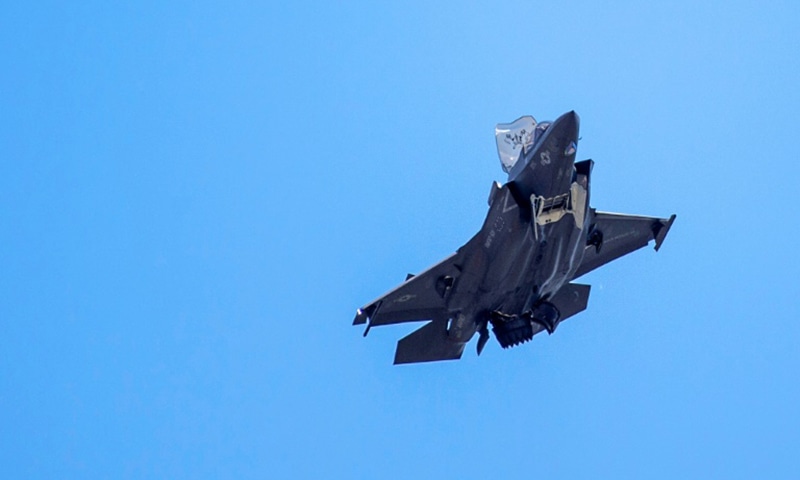

The White House confirmed on Wednesday that Turkey would be excluded from the F-35 stealth fighter jet programme after it purchased a Russian missile defence system in defiance of warnings from Western allies.
“Unfortunately, Turkey's decision to purchase Russian S-400 air defence systems renders its continued involvement with the F-35 impossible,” White House spokeswoman Stephanie Grisham said in a statement.
The US-made F-35 Joint Strike Fighter “cannot coexist with a Russian intelligence-collection platform that will be used to learn about its advanced capabilities,” she added.
Turkey's foreign ministry termed the move “unfair,” saying in a statement that “this one-sided step neither complies with the spirit of alliance nor is it based on legitimate reasons”.
Grisham said that Washington had made “multiple” offers of its own Patriot missile defence system to Turkey, but Ankara went ahead and acquired the S-400, running counter to a NATO pledge to avoid adopting Russian systems.
“This will have detrimental impacts on Turkish interoperability with the alliance,” she said.
Grisham added that the United States “still greatly values” its strategic relationship with Ankara and would “continue to cooperate with Turkey extensively, mindful of constraints due to the presence of the S-400 system in Turkey.”
Trump:'tough situation'
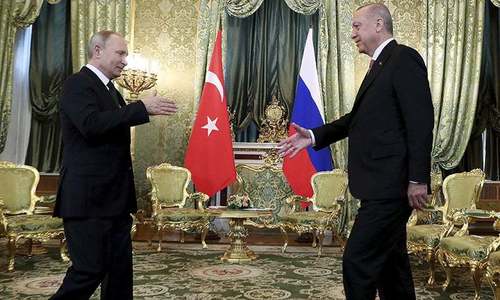
The announcement came five days after Turkey began taking delivery of the Russian missile system, shrugging off two years of warnings from the United States and other NATO allies that it could imperil their relationship.
The US action will lock out a number of Turkish manufacturers that were producing parts and components for the F-35, and block Turkey's plans to purchase about 100 of the advanced fighters.
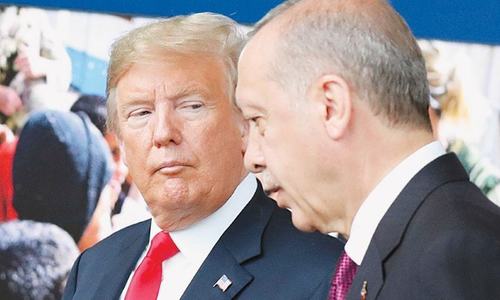
On Tuesday, President Donald Trump declined to criticise Turkey for the S-400 purchase, falsely charging that President Recep Tayyip Erdogan was unfairly forced into the move by his White House predecessor Barack Obama.
“I've had a good relationship with President Erdogan,” Trump told journalists.
“It's a very tough situation that they're in and it's a very tough situation that we've been placed in... With all of that being said, we're working through it -- we'll see what happens,” he said.
Trump rued the loss of the sale of up to 100 F-35s to Turkey, saying manufacturer Lockheed Martin would suffer.
“Because they have a system of missiles that's made in Russia, they're now prohibited from buying over 100 planes. I would say that Lockheed isn't exactly happy. That's a lot of jobs,” Trump said.
Turkish manufacturers dropped
At the Pentagon, officials said operations were already underway to move the production of around 900 parts Turkey was to provide for the F-35s to suppliers in the United States and other countries. Turkish F-35 technicians and pilots training in the United States would also be sent back by the end of this month.
“Turkey's purchase of the S-400 is inconsistent with its commitments to NATO,” said Under Secretary of Defence Ellen Lord.
“Turkey will certainly and regrettably lose jobs and future economic opportunities from this decision,” she said.
Turkey had work commitments worth $1 billion to supply the F-35 program, and could have expected a total of $9 billion in orders over the life of the programme, according to Lord.
In addition, the US Congress has required countries that make significant purchases of Russian defence equipment to be subjected to punitive sanctions.
The US State Department said on Wednesday that no decision has been made yet on sanctions over the S-400 deal.
'Still a strong ally'
David Trachtenberg, deputy undersecretary at the US Defence Department, repeated that Turkey remains a strong ally of the US and would still join NATO exercises.
“We will continue to participate with Turkey in multilateral exercises to improve readiness and interoperability, including upcoming exercises in Georgia, Germany and Ukraine,” he told reporters. Asked if Turkey could be ejected from NATO after nearly seven decades as a member, he replied: “That's a decision for the NATO alliance... That's not for us here to decide.”