DESPITE the Indian media’s assumptions of a US strategic volte-face, Islamabad would do well to acknowledge that the Trump administration still views its relations with Pakistan largely through the prism of Afghanistan. President Donald Trump’s desire for an early end to America’s longest war is the principal reason for his invitation to Prime Minister Imran Khan.
Pakistan has played a key role in facilitating the Afghan peace process and the US-Taliban talks. These have reportedly made encouraging progress over the past few months. An agreement on the withdrawal of US-Nato troops has evidently been reached between the US and the Afghan Taliban, although no timetable for the withdrawal has been finalised and it is not clear if the troop withdrawal would be commenced before, during or after a political settlement in Afghanistan.
The Taliban, for their part, have agreed to prevent terrorism against the US and third countries from Afghan territory post a settlement. It is unclear if the US will ask, as it did earlier, to leave behind a ‘small’ counterterrorism force in Afghanistan.
Despite facilitating US-Taliban talks, Pakistan has not secured any tangible reciprocity from the US.
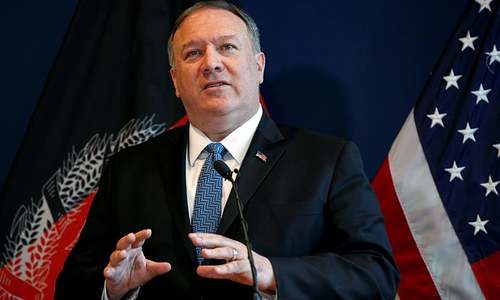
Two weeks ago, US Secretary of State Mike Pompeo said in Kabul that “the time for peace has come”. He hoped for a political settlement by Sept 1.
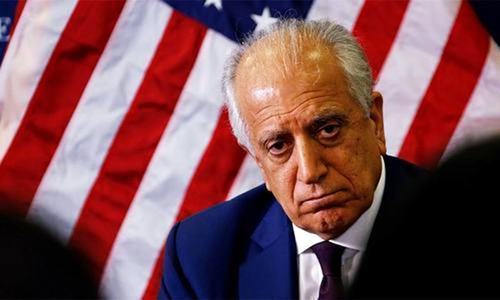
While the troop withdrawal and counterterrorism agreements are ready, the US special envoy, Zalmay Khalilzad, has so far insisted on resolving two other issues simultaneously: an intra-Afghan dialogue between the Taliban and Kabul government and a general ceasefire, tweeting that “nothing is agreed until everything is agreed”. US withdrawal from Afghanistan could be delayed if the US insists on the conclusion of intra-Afghan negotiations before troop withdrawals commence.
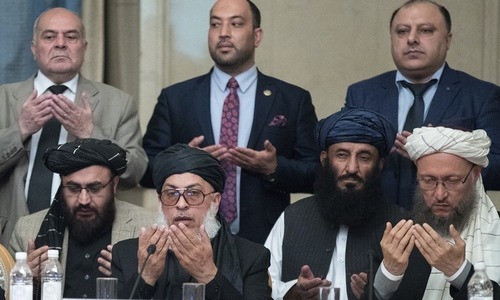
The Taliban have rejected direct talks with the Ashraf Ghani government (which they consider a US puppet), but are willing to engage with all Afghans, including members of the government in their personal capacity. An informal dialogue process was attempted in several locales and finally took place last month in Doha coterminously with the separate US-Taliban talks.
This two-day intra-Afghan session issued a positive declaration expressing the desire of all Afghan parties and groups to reduce civilian casualties “to zero” and preserve Afghanistan’s unity and sovereignty and Islamic principles.
However, there is a formidable array of questions that must be answered to arrive at an intra-Afghan political settlement: how will power be shared? On a territorial basis and/or through distribution of executive posts at the centre and provinces? How would security be maintained? Would the Taliban and regime forces be responsible for security in the areas they control? Would these forces be eventually integrated; if so, how? Would the US and the international community continue to provide economic and other assistance to a post-settlement Afghanistan, including areas/entities controlled by the Taliban? Will the (US-drafted) Afghan constitution be reaffirmed, amended or replaced? Will protections for women and minorities be preserved?
The Taliban have, so far, rejected the US proposal for a ceasefire during the dialogue. They have the military momentum, and fear losing the support of some hard-line commanders. The Taliban may eventually accept a ceasefire if convinced either that the US is genuinely committed to troop withdrawal or that they can achieve their end-goals without further fighting.
An Afghan political settlement will not be durable unless it is supported by regional powers and Afghanistan’s immediate neighbours Pakistan and Iran. The US special envoy adroitly commenced a trilateral US-Russia-China dialogue to build regional consensus. Indeed, Afghanistan is one place where the three major powers, despite their global rivalry, may have a convergent interest in fighting terrorism and promoting stability.
At their last meeting in Beijing, Pakistan was invited to join the three great powers to expand regional support for an Afghan peace settlement. Iran was reportedly also invited to the Beijing consultations but refused to participate. Iran has close traditional relations with the Tajiks, Hazaras and Shias, and new relations with some hard-line Taliban commanders. If US-Iran tensions escalate, Tehran could severely disrupt the Afghan peace process.
US withdrawal and Taliban resurgence will end India’s two-front strategy against Pakistan and its ability to sponsor TTP and BLA terrorism from Afghan territory. New Delhi would gladly play the role of a spoiler to disrupt the Afghan peace process were it not afraid of angering its US ally.
As has been oft-stated, apart from the Afghans, Pakistan has the highest stakes in securing Afghan peace. This would (hopefully) end US hostility and pressure; halt cross-border terrorism from Afghanistan; ensure execution of several pending regional connectivity projects; and enable the early repatriation of Afghan refugees.
Despite its bold and continuing facilitation of the US-Taliban talks, until now, Pakistan has not secured any tangible reciprocity from the US (apart from the designation of the BLA as a terrorist entity). On the contrary, until recently, Washington maintained economic pressure on Pakistan via the IMF and FATF, and demanded action against the leaders of the proscribed pro-Kashmiri organisations (LeT and JeM) which Pakistan has taken.
In the Washington talks, the US is likely to ask Pakistan to ‘do more’ to persuade the Taliban to negotiate with Kabul and accept a ceasefire. It may also go beyond Afghanistan to seek assurances regarding the Kashmir insurgency, nuclear and missile issues and relations with Iran.
Pakistan would do well to avoid assuming additional obligations on the western or eastern front. Over-promising and under-delivering could reopen the mistrust and acrimony that has dogged Pakistan-US ties since at least 2005.
Instead, Pakistan should expect that its strong support to the desired peace process will finally yield some gestures of US support. The US could take action against the TTP and BLA; help in monitoring and fencing the Pakistan-Afghanistan border; provide counterterrorism equipment; release blocked CSF moneys; and promote Afghan refugee repatriation. Washington could adopt more even-handed policies towards Pakistan and India. Further, the US administration could encourage its corporations and private equity firms to actively consider investment in Pakistan to revive growth and unleash its vast economic potential.
The writer is a former Pakistan ambassador to the UN.
Published in Dawn, July 21st, 2019