‘Consular access won’t change Jadhav’s sentence’


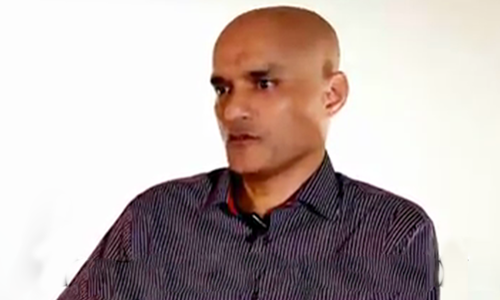
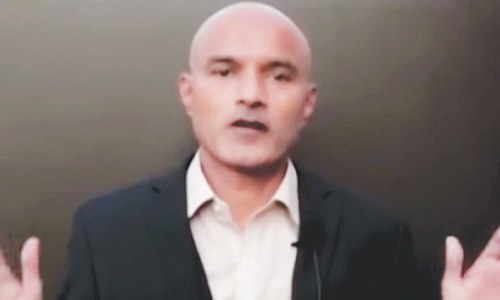
LAHORE: Barrister Khawar Qureshi, the Pakistani counsel at the International Court of Justice (ICJ) in the Kulbhushan Jadhav case, said on Monday that the consular access granted to the Indian spy will have no effect on the conviction under espionage and terrorism charges.
“The ICJ has already rejected requests of India for annulment of his conviction, acquittal, release and return,” Mr Qureshi told the media at Punjab Bar Council where he arrived to deliver a lecture to young lawyers.
Barrister Qureshi pointed out that India had refused to avail the jurisdiction of high court under Article 199 of the Constitution of Pakistan to seek a review of the conviction as unacceptable. However, the ICJ in its decision in fact held that the review by the Pakistani court was acceptable. He explained that after the grant of consular access, Jadhav could now do what India should have done after the conviction, which was invoking his right to appeal under Article 199.
To a question about the possibilities of Pakistan taking to the ICJ the Indian oppression and rights violations in held Kashmir, Mr Qureshi said he could not comment on it as it was under consideration by the government.
Earlier, Mr Qureshi shared his experience with the lawyers. “Advocacy means persuading whoever is listening to you – whether a single or 16-member jury,” he said, adding that once he had to address and persuade 5,000 Chinese in 1998.
He said lawyers were supposed to defend the rights of oppressed citizens to establish rule of law in society, adding that there was no shortage of talent in the legal sector of Pakistan.
He also announced an essay writing contest for young law graduates and a cash prize of Rs100,000 from his pocket for the winner. The subject of the essay will be announced in November, he added.
Lahore High Court Chief Justice Sardar Muhammad Shamim Khan, Justice Jawad Hassan and former attorney general Ashtar Ausaf Ali were also present on the occasion.
Published in Dawn, September 3rd, 2019