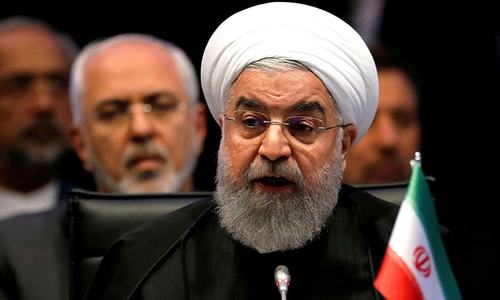
Trump-Rouhani meeting possible despite Saudi attacks: WH


WASHINGTON: The White House on Sunday did not rule out a potential meeting between President Donald Trump and Iranian President Hassan Rouhani, even after Washington accused Iran of being behind drone attacks on Saudi oil facilities.
White House adviser Kellyanne Conway said the attacks on Saturday “did not help” prospects for a meeting between the two leaders during the United Nations General Assembly this month but she left open the possibility it could happen.
“I’ll allow the president (Trump) to announce a meeting or a non-meeting,” Conway told the “Fox News Sunday” programme.
The Trump administration’s sanctions and “maximum pressure” campaign on Iran over its nuclear and ballistic missile program will continue whether or not the two leaders meet, she added.
However, Conway said, “You’re not helping your case much,” by attacking Saudi Arabia, civilian areas and critical infrastructure that affects global energy markets.
Iran has denied allegations made by US Secretary of State Pompeo that it was behind the attacks on plants in the heartland of Saudi Arabia’s oil industry, including the worlds biggest petroleum processing facility.
Yemen’s Iran-aligned Houthi group claimed responsibility for the attacks, which have cut Saudi oil output roughly in half.
Pompeo said Iran was behind nearly 100 attacks on Saudi Arabia while leaders in Tehran “pretend to engage in diplomacy.” Saudi Arabia and Iran back opposing factions across the Middle East, from Yemen and Syria to Lebanon and Iraq.
Saudi Arabia is leading a military coalition to back Yemen’s internationally recognised government against the Houthis.
Washington, a staunch ally of Riyadh, has adopted a tough anti-Iran “maximum pressure” policy to force Tehran to negotiate a broader deal that further curbs its nuclear program, restricts Tehran’s ballistic missile work and ends its support for regional proxy forces.
Conway said the US Energy Department is prepared to tap into the Strategic Petroleum Reserve after the attacks on Saudi oil facilities if needed to stabilise the global energy supply.
“We have energy under our feet and off our shores, and this president is leading the way to responsibly develop it so that when Iran attacks Saudi Arabia over 100 times, we are prepared to take action to protect our own interests,” she said.
Published in Dawn, September 16th, 2019