US-Japan trade deal hits snag as Tokyo seeks assurances on car tariffs


A United States-Japan trade deal hit a last-minute snag as Japanese officials sought assurances that the Trump administration will not impose national security tariffs on Japanese-built cars and auto parts, people familiar with the talks said on Monday.
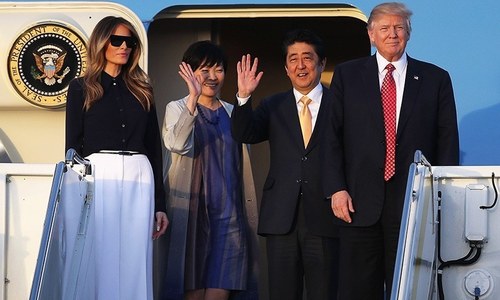
US President Donald Trump and Japanese Prime Minister Shinzo Abe have been aiming to sign a trade deal at a meeting this week during the United Nations General Assembly in New York that provides increased access to Japan for US agricultural goods and bilateral cuts in industrial goods tariffs.
But the limited trade deal is not expected to include changes to tariffs and trade rules governing autos, the biggest source of the $67.6 billion US trade deficit with Japan.
Trump has refrained thus far from following through on his threat to impose tariffs of up to 25 per cent on Japanese and European car and parts imports, citing ongoing trade negotiations with these partners.
The New York Times earlier reported that Japan was demanding a “sunset clause” that would cancel any trade benefits for the US if Trump imposes the auto tariffs on Japanese vehicles.
Japanese Foreign Ministry spokesman Masato Ohtaka said that Japan still hoped to sign the US trade deal by the end of September and that there was still time to work out remaining issues.
“Frankly speaking, we still have some time and all my colleagues in the government are making their best efforts to actually meet this target,” Ohtaka said.
Japanese Chief Cabinet Secretary Yoshihide Suga, speaking in Tokyo, told a news conference: “With the UN General Assembly meeting in mind, we are accelerating the remaining work, including the wording of a trade agreement.”
Executives at two automakers briefed on the matter said Japan has expressed concerns about signing a deal without assurances that Trump will refrain from imposing tariffs on Japanese automotive exports as he benefits from Japanese agricultural concessions.
These people, speaking on condition of anonymity, confirmed that the issue could delay the signing of a US-Japan trade deal until subsequent weeks.
Japanese Foreign Minister Toshimitsu Motegi told reporters after talks with US Trade Representative Robert Lighthizer that significant work was under way to finalise the deal but that he did not expect much delay beyond an end-September target signing off on the deal. He added he expected a “good ceremony” when Abe and Trump meet.
Asked about the US threat of added tariffs on Japanese autos, Motegi said: “I think the content will not be something to worry about.”
Details of the US-Japan trade deal have not been disclosed, but people familiar with it say that it will provide US farmers who have been battered by the US trade war with China some relief through increased access to Japan, including for American beef and pork.
But some people say it will provide less than the access they would have received had the US remained in the Trans-Pacific Partnership trade deal, which Trump pulled the US out of on his third day in office in January 2017.
The deal also includes a modernisation of digital trade rules, which is expected to reinforce the US model of internet development, prohibiting cross-border taxation of e-commerce and data localisation requirements.
Trump and Abe a year ago at the UN General Assembly agreed to discuss an arrangement that protects Japanese automakers from further tariffs while negotiations are under way.
The trade deal would not require congressional approval, using a trade law provision that allows the US president to make executive agreements to mutually reduce tariffs with a foreign trading partner.