"A diplomat who says ‘yes’ means ‘maybe’, a diplomat who says ‘maybe’ means no and a diplomat who says ‘no’ is no diplomat,” goes the quote attributed to Charles Maurice de Talleyrand, the 18th century French statesman and politician known for his wisdom, wit and versatility.
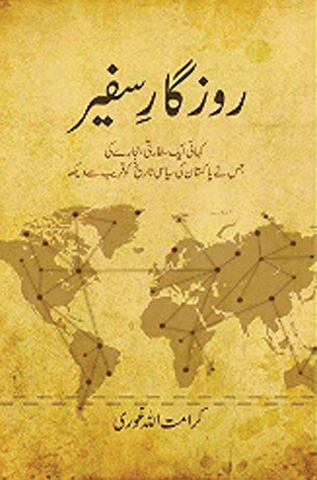
Hence, for a diplomat it is surely in order to possess tactfulness and verbal deftness. What worries the reader of Karamatullah Ghori’s autobiography Rozgaar-i-Safeer, though, is the fact that while the writer spent about 36 years of his life as a career diplomat — serving Pakistan in some very ‘sensitive’ countries during days of great upheaval — his candidly written book reads like an account of facts stated as they happened. One feels that the author does not mince his words when recording even the most unpleasant of his memories. This sounds, apparently, self-contradictory: how can a career diplomat who served for so long and is supposed to be ‘diplomatic’ be so straightforward (read: blunt)? Well, his straightforwardness was, perhaps, one of the reasons why he had to opt for an early retirement and settle down in Canada.
But those who have read Baar-i-Shanasai, an earlier work by the same author, would not care less about this apparent incongruity, because they know this man could not keep mum even before Zulfikar Ali Bhutto, one of the most feared Pakistani heads of government, and was lucky to have survived on several other occasions, too. While Ghori has been at the centre of some diplomatic victories and some embarrassments as well, he has also been an eyewitness to — or has suffered from the fallout of — some diplomatic indecencies or downright stupidities committed by none other than some of our more dim-witted VVIPs during their official visits to the country where the author was serving as Pakistan’s ambassador. For instance, Ghori writes that Benazir Bhutto refrained from visiting Kuwait after her first official visit, as her husband had caused her much embarrassment during that first time.
A former career diplomat’s autobiography is full of sometimes hilarious and sometimes depressing anecdotes about Pakistan’s self-important but often clueless people in power
Having read Baar-i-Shanasai, a collection of memoir-like pen sketches, one knows what kind of lot our so-called VVIPs belong to and no diplomat worth his salt, much less a self-respecting person, can bear with them for longer than a few days. Luckily for Ghori, the official visits of our so-called VVIPs did not last more than a few days and, in both the books, he sounds quite relieved while describing the end of the official visits of Pakistani heads of state or dignitaries, with the exception of one or two. So his unvarnished truth — sometimes bordering on bluntness, though cloaked in less offensive terms on other occasions — is justified.
The absorbing tome — a fascinating account of a journey through Pakistan’s political and diplomatic history, dotted with glimpses of Pakistani literary, political and social life in the1950s and ’60s — tells of some serendipitous encounters in exotic lands. In an interesting event, highlighting the efficiency of Pakistani VVIPs, the author describes how amazed an Algerian minister was when his Pakistani counterpart repeatedly lamented in his ‘English’ speech that the United States had stopped giving “AIDS” to Pakistan. When the translator said just that in French again and again, the Algerian minister was dumbstruck and, had the author not arrived just in time and explained that the Pakistani minister was talking about aid and not AIDS, the Algerian minister might have had a heart attack.
Other anecdotes shed light on some strange and interesting, yet enigmatic, sides of human nature. Those in power are painted in less gay colours than we are used to seeing them in. Since the author had a chance to work during the incumbency of several Pakistani heads of government and different ministers, such as Benazir Bhutto, Nawaz Sharif, Muhammad Khan Junejo, Chaudhry Shujaat Hussain and Maulana Fazlur Rahman, he lets us see the more unflattering sides of their personalities. But being an autobiography, it lets the readers also have a look into the personal life of the author as well as his life in officialdom. The first half of the book describes more of his personal life than the second half, which naturally details the work and experiences of a diplomat. The first half is also visibly more candid and exudes a flair for arts and excellence. The latter part of the book is written in a somewhat gloomy mood; understandably so, as the events described betray.
While capturing the essence of our failures and successes in international affairs and the diplomatic arena, Ghori does not skip some warming accounts of his personal life, either. Beginning right from Delhi, his ancestral abode, he describes vividly his migration to Pakistan at an early age with his parents and then goes on to share the struggles of settling down in a new environment, acquiring education, looking for jobs, appearing in competitive exams, getting selected for and being trained at the Civil Service Academy, being posted overseas, then a chain of transfers and postings, and meeting and dealing in his career with many all-powerful personalities, some his country fellows and others foreigners.
For instance, one of our maulanas — a minister then — refused to hold talks with his host country’s officials, saying that since there was no issue between the two countries, it was useless to hold talks and went to his hotel room to have a siesta, about which he was very particular.
But a diplomat’s life is not all work and no play, as it has its rewards in the shape of some lighter moments. Thanks to the unimaginative working style of the Pakistani bureaucracy and some eccentric Pakistani politicians, such moments abound in Ghori’s professional life and he seems all too eager to share many of them with the readers. For instance, one of our maulanas — a minister then — refused to hold talks with his host country’s officials, saying that since there was no issue between the two countries, it was useless to hold talks and went to his hotel room to have a siesta, about which he was very particular. Up to what extent Ghori has purged many other similarly hilarious incidents is anybody’s guess, but a tender-hearted soul as Ghori is, he comments on some of them with a heavy heart. So it will make you smile at times and, at other moments, it will depress you, making you feel like crying at the clumsy handling of sensitive international issues by our self-important leaders.
More often than not, as the book shows, some of our politicians were not only unprepared but, in several cases, were totally clueless about the issues they were supposed to discuss at the meetings for which they had gone abroad. During an official ministerial visit to Malaysia, for example, a meeting was planned to settle a controversy over palm oil imports. But the Pakistani minister — despite long tutorials and written briefs — was only able to mumble a few incomprehensible sentences. Finally, the author had to ask the minister to do justice to the refreshments and had to complete the negotiations himself.
All this comes out in a flowing style, written in elegant language which, at times, becomes poetic. In today’s world, where incorrect and unidiomatic Urdu has become the hallmark of some writers, columnists and ‘senior’ analysts — there are no ‘junior’ analysts in this country, television channels would have us believe — Ghori’s chaste and idiomatic Urdu feels like a breath of fresh air. But this pleasure is spoiled by innumerable typos. This editorial inefficiency has rendered the book — otherwise a page-turner — into a trying task for the discerning reader.
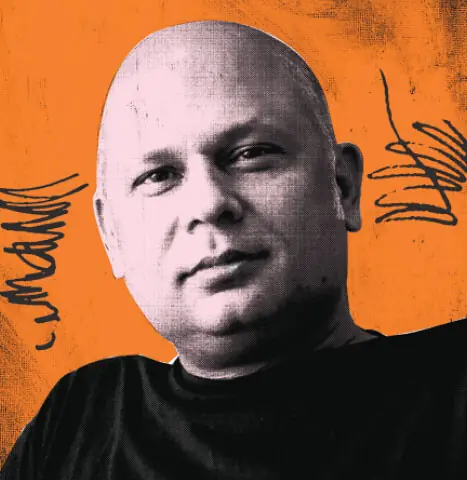
Ghori is a poet and fiction writer of Urdu and has several published works to his credit. He has also been contributing articles on international relations and diplomacy to Dawn ever since he was a student at the University of Karachi. The literary streak running through the book, enhanced by aptly quoted couplets, has added to its value. But one sincerely hopes that the second edition would be proofread more seriously. Also, a little editing to prune some didactic and pompous portions would do no harm.
The reviewer is a former chief editor of the Urdu Dictionary Board and now teaches Urdu at the University of Karachi
Rozgaar-i-Safeer
By Karamatullah Ghori
Atlantis, Karachi
ISBN: 978-9696011750
973pp.
Published in Dawn, Books & Authors, October 13th, 2019