

Women easy targets in held Kashmir, other war zones, says HRW
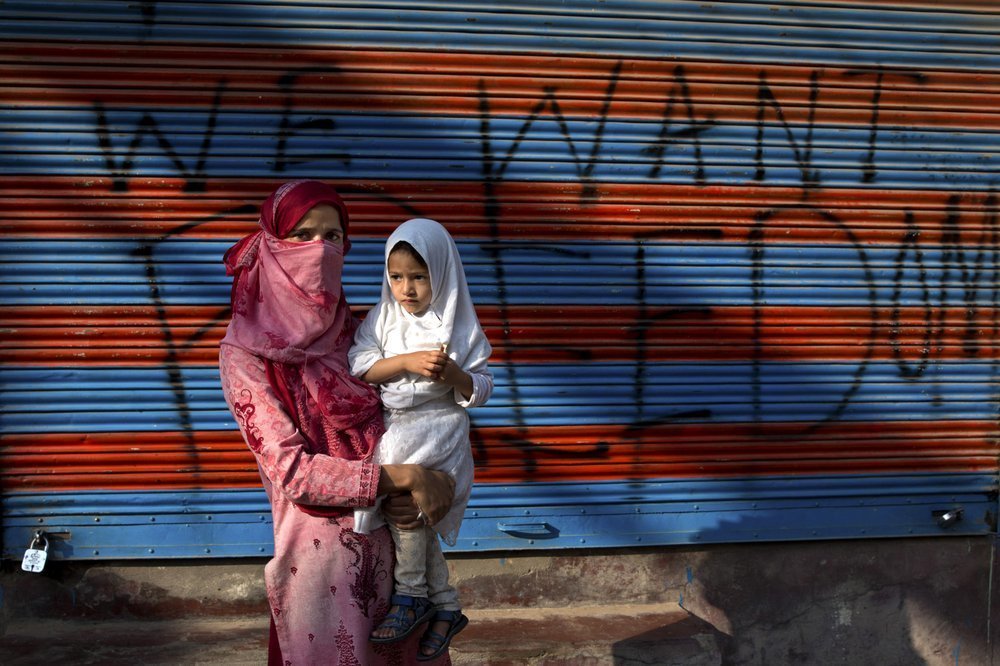

WASHINGTON: Indian security forces use rape as a method of retaliation against Kashmiri civilians, said Human Rights Watch (HRW), a US-based advocacy group, as the world began “16 days of activism” to eliminate violence against women.
The campaign began on Nov 25, which is observed as International Day for the Elimination of Violence Against Women.
This year, the activists hope to mobilise the world against the heinous crime of rape.
Recent reports by UN and other agencies indicate that Indian forces in Kashmir often target women to demoralise its people who are demanding an end to the Indian occupation. The reports point out that “the frequent rape of Kashmiri women by Indian state security forces routinely goes unpunished.”
US Secretary of State Michael Pompeo noted that “sexual violence and rape are rampant in times of both war and peace.”
He said that “now is the time to put an end to gender-based violence, to stand with survivors, and to empower victims.”
Maria Luiza Ribeiro Viotti, UN Chef de Cabinet, warned that violence against women was widespread.
“As we go about our business, one woman in three that we encounter has been or will be subjected to violence,” she said.
“In some regions, and for some groups of women, the rate is even far higher—and this is only the violence that is reported, so the real level is indeed far higher.”
Secretary Pompeo agreed with this observation, noting: “Gender-based violence is a global issue that harms millions of women and girls annually, as well as their communities and families. It pervades all aspects of life — it exists in educational environments, the workforce, and in the home.”
In July, the UN High Commissioner for Human Rights (OHCHR) documented human rights violations by Indian security forces including extrajudicial killings, arbitrary detentions, unlawful custodial deaths, enforced disappearances, and ill-treatment and torture, “including rape and sexual violence.”
The report also highlighted how the extraordinary powers granted to Indian security forces by the Armed Forces Special Powers Act, 1990 “has been wielded arbitrarily and led to near total impunity from prosecution.”
Pramila Patten, the Special Representative of the UN Secretary-General on Sexual Violence in Conflict, said at an event marking the day that she has met many victims during field visits and she believed now’s the time to put an end to this practice.
“What had long been dismissed as inevitable is now understood as preventable,” said Ms Patten. “What had once been deemed collateral or cultural, is today condemned as criminal.”
Although Secretary Pompeo did not mention specific issues in his statement, he noted that violence against women “undermines global peace and security and weakens the social fabric that binds families and communities together.”
Ms Ribeiro Viotti, while launching 16 days of activism against gender-based violence, noted that rape was a gross violation of human rights with long-term devastating impact on the entire humanity.
Phumzile Mlambo-Ngcuka, UN Women Executive Director, highlighted the “immense and long-term trauma,” associated with rape which forces victims to suffer “an unwarranted sense of shame.”
She noted that in some situations, “women are rejected by their loved ones. They are even punished by institutions in society.”
The UN also released alarming statistics, showing: One in three women and girls experience physical or sexual violence in their lifetime, most frequently by an intimate partner.
UPDATE: HRW has sent a clarification following the publication of this story.
Published in Dawn, November 27th, 2019





























