How impeachment works and why Trump is unlikely to be removed


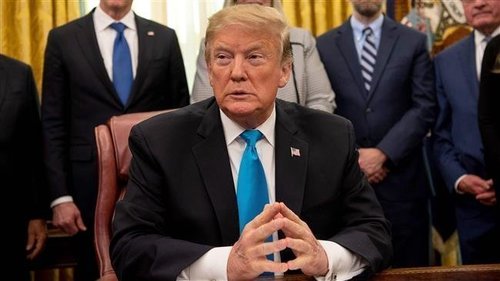
United States House of Representatives Speaker Nancy Pelosi on Thursday instructed the House Judiciary Committee to draft articles of impeachment against President Donald Trump for pressuring Ukraine to investigate a political rival.
What happens next and why Trump is unlikely to be removed from office are both explained here.
Why impeachment?
The founders of the US feared presidents abusing their powers, so they included in the constitution a process for removing one from office.
The president, under the constitution, can be removed from office for "treason, bribery, or other high crimes and misdemeanours".
High crimes and misdemeanours have historically encompassed corruption and abuses of the public trust, as opposed to indictable violations of criminal statutes.
Read: What to expect from Trump's impeachment inquiry
Former President Gerald Ford, while in Congress, famously said: "An impeachable offence is whatever a majority of the House of Representatives considers it to be at a given moment in history."
No president has ever been removed as a direct result of impeachment. One, Richard Nixon, resigned before he could be removed. Two, Andrew Johnson and Bill Clinton, were impeached by the House but not convicted by the Senate.
How does it work?
Impeachment begins in the House, the lower chamber, which debates and votes on whether to bring charges against the president via approval of an impeachment resolution, or "articles of impeachment", by a simple majority of the body's members.
The constitution gives House leaders wide latitude in deciding how to conduct impeachment proceedings, legal experts said.
The House Intelligence Committee has conducted an investigation into whether Trump abused his power to pressure Ukraine to launch investigations that would benefit him politically, holding weeks of closed-door testimony and televised hearings before issuing a formal evidence report.
The Judiciary panel will use the report to consider formal charges that could form the basis of a full House impeachment vote by the end of December.
If the House approves articles of impeachment, a trial is then held in the Senate. House members act as the prosecutors; the senators as jurors; the chief justice of the US presides. Historically, the president has been allowed to have defence lawyers call witnesses and request documents.
Can the Senate refuse to hold a trial?
There is debate about whether the constitution requires a Senate trial. But Senate rules in effect require a trial, and Senate Majority Leader Mitch McConnell has publicly stated that he will allow one to proceed.
Republicans could seek to amend those rules, but such a move is politically risky and considered unlikely, legal experts said.
What about opening a trial and quickly ending it?
The Senate rules allow members to file, before the conclusion of the trial, motions to dismiss the charges against the president. If such a motion passes by a simple majority the impeachment proceedings effectively end.
Clinton's Senate impeachment trial, which did not end in a conviction, lasted five weeks. Halfway through the proceedings, a Democratic senator introduced a motion to dismiss, which was voted down.
What's the party breakdown in Congress?
Democrats control the House. The House comprises 431 members at present, 233 of whom are Democrats. As a result, the Democrats could impeach the Republican Trump with no Republican support.
In 1998, when Republicans had a House majority, the chamber voted largely along party lines to impeach Clinton, a Democrat.
The Senate now has 53 Republicans, 45 Democrats and two independents who usually vote with the Democrats. Conviction and removal of a president would require a two-thirds majority. A conviction seems unlikely. Should all 100 senators vote, at least 20 Republicans and all the Democrats and independents would have to vote against him.
Who becomes president if Trump is removed?
In the unlikely event the Senate convicted Trump, Vice President Mike Pence would become president for the remainder of Trump's term, which ends on January 20, 2021.