IN the last couple of decades, London has earned a reputation for becoming a haven for money launderers globally. Its high-end property market has attracted ‘hot money’ from diverse and dubious sources, spanning the gamut from Nigerian generals to Russian oligarchs. Yet, in the last few years, there have been calls for reversing this trend, accounting for the dodgy funds that make their way to the UK capital, and as a result, not only impoverish those from whose countries the funds are transferred but also render the central London property market unaffordable for many Britons.
As a consequence, significant changes were introduced in the law when the Criminal Finances Act, 2017 was enacted two years ago. Unexplained Wealth Orders (UWOs), which represent a drastic shift in the UK’s attitude to forfeiture and when a state can deprive an individual of property, came into effect in January 2018.
Briefly, the high court may grant a UWO if 1) the respondent holds a property over £50,000, 2) there are reasonable grounds to suspect that the respondent’s lawful income was insufficient to obtain the property, and 3) the respondent is a ‘politically exposed person’ or has been involved in serious crime. It must be added here that for those who are citizens of the European Economic Area, the requirement of being suspected of crime, or linked to someone suspected of crime, becomes essential and merely being a ‘politically exposed person’ will not suffice.
How can the public not have a right to information about the settlement?
As the law represents an interface between criminal law and civil enforcement, for a UWO investigation to be successful, a criminal investigation does not have to be started. The law is controversial, however, because it shifts the burden of proof to the respondent to prove the source of his/her income and has been criticised for presuming the respondent as guilty until proven innocent. Failure to comply can result in the freezing/seizure of the property, and property can include not just bank accounts and real estate but also jewellery, as the case of the famous Azerbaijani banker’s wife, Zamira Hajiyeva, who spent £16 million in one shopping spree at Harrods, illustrated.
When Malik Riaz recently settled with the National Crime Agency in the UK for an astronomical £190m, representing the largest settlement of its kind that the NCA had secured, the NCA did say the agreement was a civil matter and “did not represent a finding of guilt”. This, however, cannot be interpreted the way Mr Riaz has been spinning it, to suggest that he has done nothing wrong. The NCA does not obtain a UWO and the respondent does not subsequently settle if there has been no wrongdoing. Given the nature of the law, however, the NCA does not need to establish guilt to proceed. It is the respondent who has to establish his innocence. A UWO can be contested, as it was in the case of Ms Hajiyeva, but she failed in her application to set it aside.
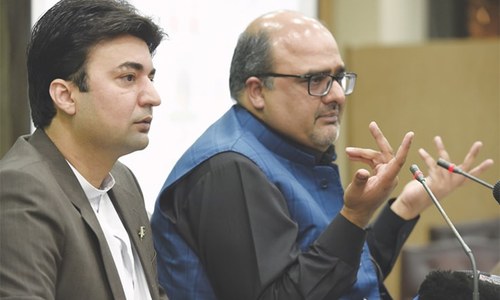
The logical next step, however, would be for the government of Pakistan to order a probe into the alleged corruption that has led to this exorbitant settlement with the NCA. Instead, we witnessed an awkward silence by government functionaries, followed by a press conference by Mr. Shahzad Akbar, in which he announced that the money will be used to pay off Mr Riaz’s liability to the Supreme Court of Pakistan. This is astounding given that the settlement with the NCA has nothing to do with and is completely independent of the Supreme Court of Pakistan’s determination against Mr Riaz and is therefore tantamount to returning the money to Mr Riaz.
Mr Akbar, uncharacteristically reticent to speak about the matter, also noted that he is bound by a confidentiality agreement with the NCA. This again is fanciful. One of the foremost proponents of the UWO laws was Transparency International, which aims to fight corruption in the public interest. How then can the public not have a right to the information regarding this settlement? Even if the government of Pakistan is subject to a confidentiality deed there is a compelling public interest in not abiding by it and such an agreement can easily be legally challenged in the UK as unjust and against the underlying aim of fighting corruption.
One suspects that there is a lot more that can be seized by the NCA given the investments made in London by global kleptocrats. This includes not just Pakistanis but several other nationalities as well. While the new laws have made the forfeitures of property easy, what hasn’t been given much thought is what will be the fate of the money recovered. Those laundering their money in London’s high-end property are often too well connected to be prosecuted back home and may find innovative ways to have the money returned to them.
The writer formerly worked as an international finance lawyer in London.
Twitter: @ayeshaijazkhan
Published in Dawn, December 8th, 2019