Eye hospital says most of the patients who lost vision have recovered


ISLAMABAD: The condition of most of the patients who lost their vision allegedly due to eye drops they were administered at Al-Shifa Trust Eye Hospital has improved.
According to the findings of the Drug Regulatory Authority of Pakistan (Drap), the medication was not the cause of the incident and there could be other reasons, such as human error or a hospital acquired infection.
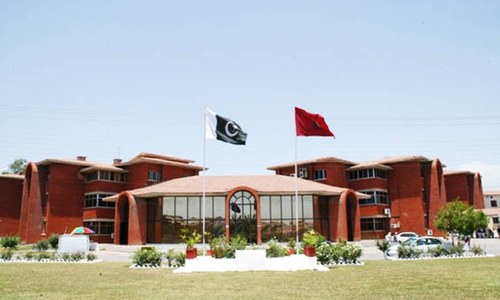
The eye hospital has claimed that it has never had any case of hospital acquired infections and that it uses the best machinery and ensures that equipment is sterilised. The hospital is waiting for a laboratory report on the eye drops.
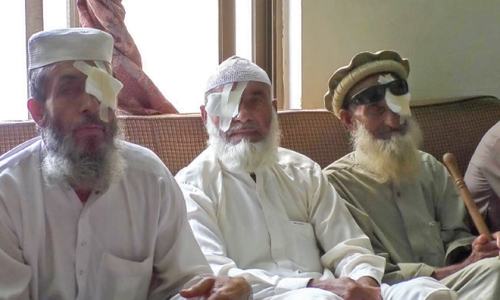
Around three weeks ago, patients who had undergone glaucoma operations said they had lost their eyesight. The patients had said that around 80 people were affected, while the hospital administration claimed that there were nine cases in which patients had contracted severe infections.
Manzoor Ahmed Kiani, 53, lost his vision after he underwent an operation for glaucoma on Jan 8. Mr Kiani, who works as a sub-inspector in Bagh, Azad Kashmir, told Dawn that the hospital called him but he had not felt any improvement in his case.
Drap says incident did not appear to be caused by eye drops, but could have been due to human error or hospital acquired infection
“On Thursday, I went to the Military Hospital to get myself tested. The doctor at the hospital told me I have a deep infection and gave me medicine with the suggestion to visit again after a fortnight,” he said.
The incident was highlighted when former prime minister Raja Pervaiz Ashraf said that one of his constituents had lost her eyesight.
The hospital’s media coordinator Mirza Riaz Baig told Dawn that most of the affected patients had recovered and only two patients were still visually impaired.
“We have kept them under observation at the hospital and they are being treated. We are hopeful that both patients will recover soon. We have sent the whole batch of eye drops to a laboratory to find out if there was any impurity in them. We are still waiting for the lab report. As the matter is related to eyesight, it is being investigated thoroughly,” he said.
When asked, Mr Baig said that hospital acquired infections occur around the world, but the hospital has a state-of-the-art operation theatre and equipment, and cares about the sterilisation of instruments. He added that the hospital has never faced such an issue before.
According to a National Institute of Health (NIH) report, healthcare associated infections are one of the most common public health problems that impact morbidity, mortality and quality of life. Most germs that cause serious infections in healthcare are spread by people’s actions. Every patient is at risk of infection while being treated.
According to reports, hundreds of millions of patients are affected by healthcare associated infections around the world every year. More than half of these infections could be prevented by caregivers by properly cleaning their hands at key moments in patient care and by keeping places, particularly operation theatres, clean.
Mr Baig said the hospital carries out around 250 operations every day, of which only nine patients had a severe reaction or allergy after the eye drops were administered.
“The hospital provides free treatment to 70pc of patients, and 20pc get subsidised treatment. Only 10pc of patients pay for their treatment because they say they can afford the expense and refuse free treatment,” he said.
Drap CEO Dr Asim Rauf said that an authority official visited the hospital and met with its executive director, retired Brig Rizwanullah.
“According to our investigations the infection was not drug related. Moreover I have never heard of vision loss due to eye drops. Usually people are allergic to the drops and recover after some days. in case of an impurity in the eye drops, a large number of patients would have lost their eyesight,” he said.
Published in Dawn, January 31st, 2020