Differing US documents helped fuel Afghan prisoner dispute
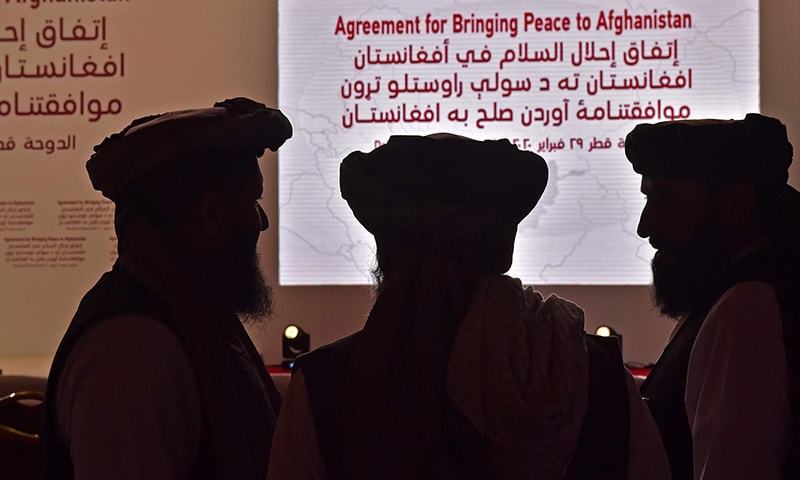

WASHINGTON: The United States helped fuel a dispute between the Taliban and the Afghan government over prisoner releases that threaten US peace efforts by using different language in documents it agreed with each side, sources familiar with the matter said on Monday.
The US-Taliban deal says the Afghan government will free up to 5,000 Taliban detainees by March 10, while the US-Afghan declaration commits the Kabul government only to taking part in US-brokered talks on the “feasibility” of such a release.
The issue has emerged as a fresh impediment to peace talks between the insurgents and a yet-to-be-named Kabul delegation that are to begin on March 10 under the US-Taliban agreement for a US troop withdrawal from Afghanistan signed on Saturday.
The Taliban on Monday said they would not participate in the so-called intra-Afghan peace talks until Afghan President Ashraf Ghani’s government releases about 5,000 military and political prisoners.
Ghani on Sunday said the issue cannot be a precondition to the peace talks and will have to be worked out in negotiations. “It is not in the authority of United States to decide, they are only a facilitator,” he said.
Sources familiar with the matter identified the discrepancy as a significant potential obstacle to the talks and, by extension, to US President Donald Trump’s desire to pull US forces out of Afghanistan.
“There is going to have to be a compromise,” said a former senior US official familiar with the issue who spoke on condition of anonymity. “The question is whether [the Afghan sides] can do it themselves or America has to play the heavy.”
Asked about the discrepancy, a second source familiar with the matter said: “It’s clearly a problem. I am sympathetic to Ghani. This is his leverage in the negotiation. For the US to negotiate away his leverage before they even get to the negotiating table I imagine was somewhat galling.”
The Kabul government’s stance appears to be supported by the joint declaration Ghani and US Defence Secretary Mark Esper issued in Kabul shortly before Saturday’s signing of the US-Taliban accord in the Qatari capital Doha.
That statement said the Afghan government will take part in a “US-facilitated discussion with Taliban representatives on confidence-building, to include determining the feasibility of releasing significant numbers of prisoners on both sides.”
In contrast, the US-Taliban agreement appears to commit Kabul to releasing up to 5,000 prisoners even though the Ghani government was excluded from the negotiations with the Taliban led by Zalmay Khalilzad, chief US negotiator.
“Up to five thousand prisoners of the Islamic Emirate of Afghanistan will be released,” while the insurgents would free up to 1,000 prisoners, the document says.
The US State Department did not immediately respond to a request for comment on the discrepancy.
Published in Dawn, March 4th, 2020