Born in 1937 into an erudite Muslim family in Aligarh, Zarina Hashmi studied mathematics at university, which, along with architecture, fed into her artmaking. She was separated from her family in the 1950s, when they moved to Karachi following Partition. Hashmi, by then married to an Indian diplomat, travelled for several years. During a posting in Bangkok she began lessons in woodcut printing from a Thai artist. In Paris she enrolled at Stanley William Hayters’ atelier and, in Tokyo, her printmaking mentor was Toshi Yoshida. Settling in New York in 1976, she quickly established herself in the city’s feminist art community. She remained New York-based for the rest of her life, but felt uprooted.
Hashmi exhibited her portfolio Home is a Foreign Place, at Chawkandi Art, Karachi, in 2000. In 2004, Cities, Countries and Borders, followed at Gallery Rohtas 2, Lahore. The artist’s style and choice of material were dictated by the central theme of her life and art — migration. Her stark, geometric and monochromatic work was so minimalistic that meanings needed to be extracted from them. “I work in small scale,” Hashmi told writer Lisa Liebmann in 1984, “I know the work has density of emotion and it will create its own space around it.” Rendered in wood-block prints and silkscreens, metal, wood or terracotta sculpture, her restraint was deeply personal and entirely reflective of her selfhood, memories and longing for home.
The art world mourns the passing of Zarina Hashmi, who lived her life and honed her craft on her own terms without compromising her true identity and ideals
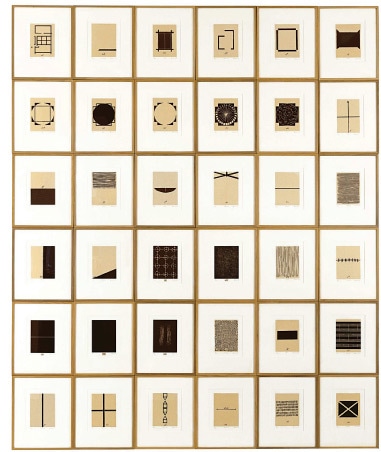
She described Home Is A Foreign Place as, “my narrative of the house I was born in and left in my early 20s, never to return.” This series of 36 ideograms, each rendered as a separate woodblock print, was based on words that impacted Hashmi’s memory, such as “Darwaza”, “Chawkhat,” “Khushboo,” “Baarish” and poignant others such as, “Raat”, “Wehshat,” and “Andhera.” These words were given to a calligrapher in Pakistan who wrote them in the Urdu Nastaliq script. She then developed different images for the words through simple grids and crosses; triangles, geometric forms of squares and circles to form a mix of Urdu text and Modern Minimalist imagery. This fusion enabled her to straddle both worlds — the traditional she had left behind, and the new that she kept encountering in foreign lands. Similarly, splintered and fractured maps, diagrams and angular designs in the ‘Cities, Countries and Borders’ series illustrated questions of identity, the meaning of home and the desire for roots, also in an entirely abstract way.
For South Asians, Hashmi’s life and art are relics of a vanishing generation. But it is not just that she was a product of a refined Urdu-speaking generation and culture centred around Aligarh University, but it is how she held her own in the contemporary Western art world that actually defines her stature. “New York is not my home, this is someone else’s home,” she said in 2017. “I’ve lived here for 40 years but my identity is basically that of an exile.” She lived her life and honed her craft on her own terms without compromising her true identity and ideals. Although wider recognition arrived late in her life, Hashmi eventually became one of the most esteemed South Asian artists in the American and British contemporary artscape. Among the many honours and accolades that came her way the final was a survey of the artist’s output, Zarina: Atlas of Her World, which opened at the Pulitzer Art Foundation in St Louis in September 2019 and closed this February.
Published in Dawn, EOS, May 10th, 2020