Govt plans another joint sitting of parliament for FATF bills passage


ISLAMABAD: After the rejection of two FATF-related bills by the opposition-dominated Senate, the government is now planning to convene another joint sitting of parliament next week to get the crucial legislation passed, Dawn has learnt.
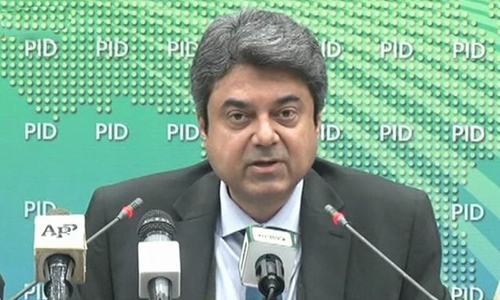
Adviser to the Prime Minister on Parliamentary Affairs Babar Awan on Friday talked to National Assembly Speaker Asad Qaiser over phone to discuss the agenda for the upcoming joint sitting in order to ensure the smooth passage of the bills required to be passed to fulfil conditions of the Financial Action Task Force (FATF) to bring the country out of the grey list of the countries in terms of terror financing.
After the passage of the 18th Constitution Amendment, if a bill passed by one house of parliament is rejected by the other house, it can only become a law after its passage from a combined sitting of the two houses.
When contacted, Mr Awan said that so far no date had been finalised for the joint sitting. He said that he planned to have a joint meeting with the NA speaker and Senate Chairman Sadiq Sanjrani to finalise the date and agenda for the joint session.
In reply to a question, he said the government was ready to talk to the opposition, but no compromise would be made on the issues of national security and accountability. He alleged that the opposition was only interested in putting “a lock at the gate of the National Accountability Bureau (NAB)”.
PM’s aide rules out compromise on national security, accountability
The 104-member Senate had on Aug 25 rejected through a voice vote the Anti-Money Laundering (Second Amendment) Bill and the Islamabad Capital Territory (ICT) Waqf Properties Bill that had already been passed by the National Assembly only the previous day after the opposition objected to some of the provisions of the laws and linked its cooperation to retraction of the remarks made by Leader of the House Dr Shahzad Waseem about their leadership.
Responding to the opposition’s insistence on withdrawal of his remarks on Tuesday, Mr Waseem said he had not named anybody.
Some opposition members, however, said he did name Shahbaz Sharif and Asif Ali Zardari.
The opposition members had also sought an apology from him, whereas the government side accused the opposition of trying to blackmail it.
A day after the rejection of the two bills, the opposition questioned the legality of the entire proceedings leading to the voting process and said the bills could not be sent to the joint sitting of parliament.
While the opposition controverted the discretionary powers exercised by the Senate chairman to allow the motion seeking permission to take the bills for consideration, Chairman Sadiq Sanjrani ruled that the proceedings were in accordance with the rules of business.
The opposition has a thin majority of just nine votes in the joint sitting of parliament, but the government is hopeful of getting the two bills passed from it.
The opposition’s attitude in the Senate drew an immediate and strong reaction from Prime Minister Imran Khan who wrote a series of tweets to attack the opposition parties after the rejection of the bills, stating that “from day one, I have maintained that the self-serving interests of the opposition leaders and the country’s interests are divergent”.
Mr Khan stated that the opposition leaders had become desperate to save their corrupt money by trying to prevent parliament from functioning “by seeking to undermine government’s effective Covid-19 strategy — a recognised global success story — and now by trying to sabotage Pakistan’s efforts to exit FATF grey list”.
The prime minister further said that the opposition tried to hide behind facade of democracy to protect their loot and plunder.
“To blackmail for NRO by defanging NAB, they would even have Pak put on FATF black list to destroy nation’s economy & increase poverty. They keep threatening to bring down govt unless given NRO,” he had said, adding that “no matter what happens, my government will not allow any NRO as it would be betrayal of nation’s trust in holding plunderers of public wealth accountable”.
Soon after the prime minister’s tweets, both the Pakistan Peoples Party (PPP) and the Pakistan Muslim League-Nawaz (PML-N) defended their act of opposing the bills.
PPP’s Sherry Rehman, while replying to the PM’s remarks, also through tweets, said they had opposed the bills as powers to arrest without warrants were being given to the police and investigators, adding that “this is neither required by FATF nor is it defensible in any even the most illiberal democracy”.
“These laws are being pushed as draconian laws,” she said. Moreover, she added, the FATF was being used “to expand the scope of NAB to witch hunt the opposition”.
PML-N’s Shahid Khaqan Abbasi had also declared the proposed bills as “black laws” and in violation of the fundamental rights of the citizens.
The government had previously convened joint sittings of parliament on Aug 6 and Aug 20.
Published in Dawn, August 29th, 2020