Freed Taliban have returned to battlefield: top Afghan negotiator


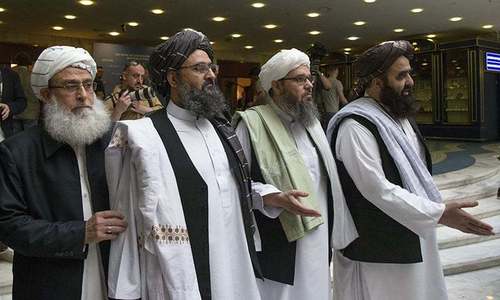
WASHINGTON: A number of Taliban prisoners who were released by the Afghan government as a condition for peace talks have taken up arms again, the government’s lead negotiator Abdullah Abdullah said on Tuesday.
Abdullah, the chairman of Afghanistan’s High Council for National Reconciliation, said discussions with the Taliban in Qatar so far have been positive.
However, he said some — though not the majority — of the 5,000 Taliban prisoners released by the government as a condition for talks had resumed the fight against Kabul.
“I do know that some have returned to the battlefield, which is a violation of the agreement that they had made,” Abdullah said during an online conference with the US Council on Foreign Relations.
Abdullah said talks between the two sides had begun in Doha on a positive note, as the delegations build some familiarity with each other.
Yet the level of violence inside Afghanistan has not fallen, and he called on the United States to pressure them to agree to a ceasefire.
“Unfortunately, so far, the level of violence is very high and to a level that is not acceptable for the people,” Abdullah said.
“I repeat my call to the Taliban themselves and also to all partners who have any leverage over the Taliban to press on that point.”
Abdullah said he planned to visit Pakistan in the coming days for the first time since 2008.
Khalilzad
The level of violence in Afghanistan is unacceptably high and the United States expects further setbacks during talks, the Special Representative for Afghanistan said on Tuesday, as the Afghan government and Taliban remained far apart on even basic issues 10 days into talks meant to end two decades of war.
“By any measure, current levels of violence are too high,” special envoy Zalmay Khalilzad told a House of Representatives hearing. “We know that reductions are possible,” Khalilzad said.
Despite difficulties, the talks are the best hope for peace in years and come as a result of a February pact between the Taliban and United States, allowing US forces to withdraw in exchange for Taliban promises on terrorism.
Published in Dawn, September 23rd, 2020