Iran operating advanced centrifuges at nuclear enrichment facility: IAEA


Iran has begun operating advanced centrifuges at an underground section of its primary nuclear enrichment facility, the UN's nuclear watchdog said on Wednesday.
The International Atomic Energy Agency (IAEA) had reported last week that Iran had installed the centrifuges in a buried part of the Natanz site.
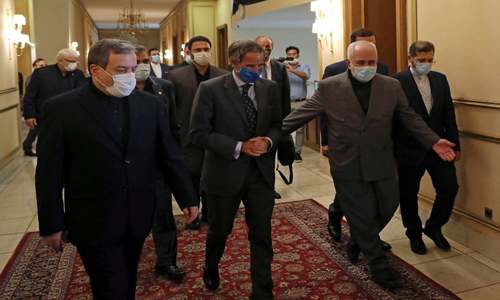
IAEA Director-General Rafael Grossi told a press conference on Wednesday that while at the time of that report “they had not started operations... it is now happening”.
Under the terms of Iran's 2015 deal with world powers, it is only meant to enrich uranium with a less sophisticated variety of centrifuges.
However, since May last year, Iran has taken steps to violate that limit and several others laid down in the deal, in retaliation for US President Donald Trump's withdrawal from the accord in 2018 and subsequent re-imposition of sanctions.
Grossi said that the operation of the centrifuges in question did not mean there would be any “significant increase in the volumes” of uranium being enriched, since they been transferred from a different part of the facility.
In its report last week, the IAEA said that Iran's stockpile of enriched uranium now stood at over 12 times the limit in the 2015 accord.
Nuclear traces unexplained
On Monday, the New York Times reported that Trump had asked top aides about the possibility of striking Iran's nuclear facilities before he leaves office in January.
According to the Times, the most likely target of such a strike would have been Natanz.
While the Times reported that senior officials “dissuaded the president from moving ahead with a military strike,” Iran responded by saying any such attack would “be met with a crushing response”.
Asked whether he was concerned about the reports of a potential US strike, Grossi said: “I would not speculate on a speculation. We haven't been informed of anything.” In July an above-ground part of the Natanz facility was damaged in an explosion which Iran blamed on “sabotage”.
European governments who have battled to keep the 2015 deal afloat have been buoyed by the victory of Democrat Joe Biden in the US presidential election two weeks ago, but observers caution that a Biden administration may find it difficult to reverse sanctions put in place by Trump.
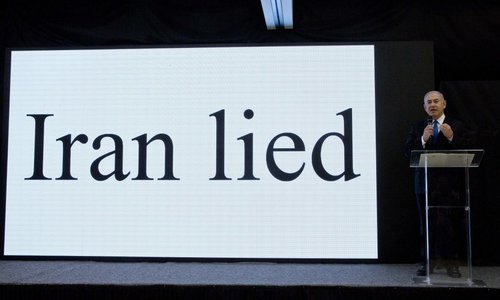
Grossi also addressed another part of last week's report in which the IAEA said Iran's explanations over the presence of nuclear material at an undeclared site in the country were “not credible.” He named the site as being in the Turquzabad district of Tehran, previously identified by Israel as an alleged site of secret atomic activity.
“What they are telling us, from a technical point of view, doesn't add up,” Grossi said.
“This is not an academic exercise. They need to explain why we found what we found,” he added.