A HEIGHTENED state of tension persists in the subcontinent, with relations between Pakistan and India at a particularly low point. While relations have never been ideal, with mostly downs and very few ups, ever since Narendra Modi took the reins of government in New Delhi in 2014, ties have been especially testy.
Indian adventurism along the Line of Control has added to the tension, while Pakistan has proved that it is ready to defend itself on numerous occasions. Last year’s episode following the Balakot incident, in which an Indian fighter jet was shot down, clearly showed that any aggression against Pakistan will be countered. But irresponsible and aggressive statements from Indian generals and politicians show that New Delhi is not in the mood for peace.
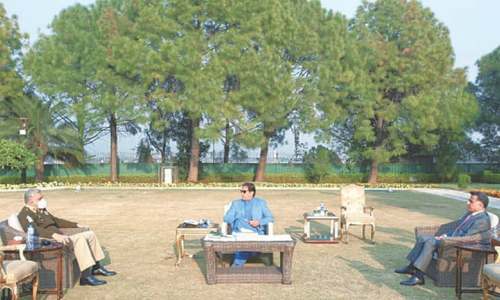
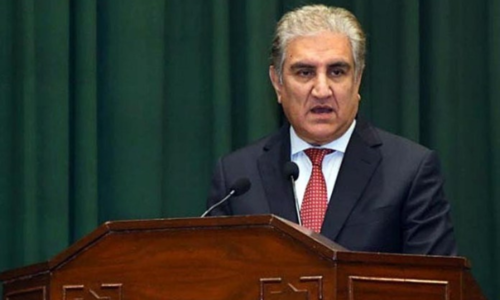
In this regard army chief Gen Qamar Bajwa, while touring forward positions in AJK recently, said any Indian “misadventure” would get a befitting response. Moreover, Foreign Minister Shah Mahmood Qureshi said in Multan that dialogue with India was not possible “in the prevailing situation”, while making particular reference to atrocities in occupied Kashmir.
While peace is a worthy goal and war must be avoided, the question arises: can Pakistan succeed by making overtures to India, when the latter continues to rebuff such gestures? The answer seems obvious. While decades of tension in South Asia have hampered socioeconomic growth and prevented the region from realising its potential, there appears to be no appetite for peace in New Delhi at the moment. The Hindu chauvinist BJP that rules India is hell-bent on excluding Indian Muslims from the national mainstream, while at the same time demonising Pakistan.
Further, the BJP’s ham-headed tactics in India-held Kashmir have failed to subdue the disputed region. The latest proof of this came in local elections in IHK, in which parties opposed to the BJP won the majority of seats. The fact is that even some of New Delhi’s staunchest loyalists in the region have cried foul over the Modi government’s tactics to scrap occupied Kashmir’s autonomy.
Indeed, at the moment it is difficult to make attempts at peace in such a stifling atmosphere. However, the people of South Asia must ask themselves if living in the constant shadow of war, poverty and disease is the region’s fate. It does not have to be this way, even though certain lobbies on both sides — hawkish elements in Pakistan and the Hindutva brigade in India — thrive on confrontation.
Saner minds on both sides, particularly in India, must realise that South Asia’s nearly two billion people deserve a better future, one that can be achieved by allowing talks, trade and travel. Of course, visionary steps are required, such as a just solution to the Kashmir dispute, while there must be an acceptance of Pakistan as a reality by the Indian establishment.
Published in Dawn, December 25th, 2020