Pakistan, India exchange nuclear installations list in annual practice


Pakistan and India on Friday exchanged lists of their nuclear installations and strategic facilities under the terms of an agreement which restricts the two countries from attacking each other's atomic facilities in case of war, a statement from the Foreign Office said.
The annual exchange, which has been conducted on the first day of every year since 1992, began after a December 1988 pact between the two rival states termed the 'Agreement on Prohibition of Attacks against Nuclear Installations and Facilities between Pakistan and India'.
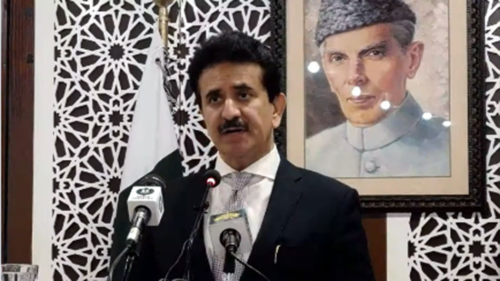
As part of the exchange, the Foreign Office handed over its list to the Indian High Commission while the Indian Ministry of External Affairs handed over a similar list to an officer of the Pakistan High Commission in New Delhi.
Under the agreement, both the parties are to “refrain from undertaking, encouraging or participating in, directly or indirectly, any action aimed at causing the destruction of, or damage to, any nuclear installation or facility in the other country”.
The two countries have been rivals for over 70 years and have fought three major wars in that period.
Present ties between the two remain particularly strained due to a string of recent developments beginning from the Feb 2019 Pulwama suicide attack, which India blamed on Pakistan, in which 44 of its soldiers were killed in occupied Kashmir.
Days after the Pulwama incident, the two nuclear states came on the brink of war after an aerial dogfight between their air forces, resulting in the downing of two Indian fighter planes and Pakistan capturing one of the pilots.
In August 2019, India's revocation of occupied Kashmir's special status in violation of UNSC resolutions led to further deterioration of ties.
Recently, Pakistan has warned that India is planning another "false-flag operation" similar to the one it conducted in the aftermath of the Pulwama incident, warning that any such act will be met with a strong response from Pakistan – as had happened in Feb 2019.