Adviser to PM defends civil service reforms
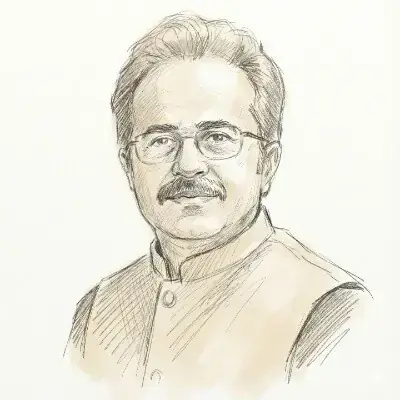
![Dr Ishrat Hussain conceded that “criticism was levied that the Task Force [on the reforms] was dominated by the PAS officers". — Photo by Tahir Jamal, White Star](https://i.dawn.com/primary/2021/02/602c82fac6214.jpg "Dr Ishrat Hussain conceded that “criticism was levied that the Task Force [on the reforms] was dominated by the PAS officers\". — Photo by Tahir Jamal, White Star")

ISLAMABAD: Dispelling the impression that the recent civil service reforms are the brainchild of Pakistan Administrative Service (PAS), the powerful cadre of the bureaucracy, Adviser to the Prime Minister on Institutional Reforms Dr Ishrat Hussain has claimed that the reforms were finalised after over 60 consultative sessions and more than 1,900 officers contributed to the process.
The federal government on Jan 21 announced the reforms that would pave way for ‘forced’ retirement of delinquent officers from government service and have introduced tough criteria for promotion of the bureaucrats.
There is criticism over these reforms such as these are ‘outdated’ and were in the past set aside by the superior judiciary for not being in consonance with fundamental rights. The officers belonging to civil service cadres say that the PAS, formerly known as District Management Group, was behind these reforms.
In a research paper on the civil service reforms, Dr Hussain conceded that “criticism was levied that the Task Force [on the reforms] was dominated by the PAS officers and had little representation from other services”.
Says these were finalised after over 60 consultative sessions attended by more than 1,900 officers
He stated that the PAS officers dominated the task force because all of its ex-officio members i.e. the chief secretaries and federal secretaries belonged to that cadre. He however stated that non-official members were drawn from among the academia, private sector and also retired civil servants belonging to Pakistan Foreign Service, Police Service of Pakistan and Inland Revenue Service.
“More than 60 consultative sessions [were] held in Quetta, Karachi, Lahore, Peshawar and Islamabad” he stated, adding that 1,900 officers from all the service cadres, ex-cadre and non-cadre were consulted and their views were incorporated in the recommendations.
The task force also opined that unless the reforms were introduced, any structural change such as creation of National Executive Service – an alternative of senior bureaucracy – would not make much sense.
Dr Hussain highlighted that the federal cabinet had approved the policy for the selection of heads of public sector corporations and bodies under which a transparent procedure would be adopted for selection of chief executives, managing directors and heads of public sector organisations and enterprises through an open merit-based competitive process.
He stated that the “systematic training of ex-cadre and non-cadre officers on the lines of the cadre services has been made mandatory for promotion. Mid-career and senior management training courses at National Institutes of Management (NIMs) have been divided in two parts – the first half would be common training course at NIMs while the second part would take place at the Specialized Training Institutions (STIs) in their respective professional fields”.
Regarding the promotion rules, Dr Hussain stated that “promotion of senior posts would no longer be based on seniority but on the past performance reports, training institutions assessments and evaluation by the Central Selection Board about the potential of the candidates to occupy the higher positions. Rotation among provincial and federal governments for all Pakistan Service Officers would form part of the eligibility for promotion to the next grade.”
Defending forced retirement, the adviser stated: “Officers who have been superseded or [have] shown unsatisfactory performance consistently would be retired after completing twenty years of service by independent boards.”
“Moreover, amendments to the Efficiency and Discipline Rules for making internal accountability more effective have been notified.”
He stated that the government had introduced two new streams “to attract specialised and technical skills of high order from among the private sector and overseas Pakistanis — Management Position pay scales and Special Profession pay scales — with attractive packages much beyond the existing Basic Pay Scale. These positions would be filled purely on the basis of merit through an open, competitive process.
Published in Dawn, February 17th, 2021