UN experts voice concern over Indian moves to enact new laws in occupied Kashmir


Two UN human rights experts have voiced their concern over India's decision to revoke occupied Kashmir's autonomy and enact laws that could curtail the political participation of Muslims and other minorities.
The statement by Fernand de Varennes, Special Rapporteur on minority issues, and Ahmed Shaheed, Special Rapporteur on freedom of religion or belief, was released on Thursday as diplomats from nearly two dozen countries concluded a two-day visit to the occupied valley.
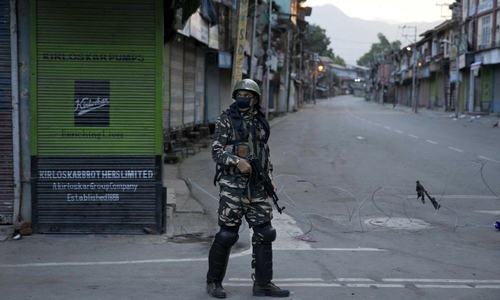
Read: Businesses shut in protest as India takes foreign diplomats to tour occupied Kashmir
"The state of Jammu and Kashmir was established with specific autonomy guarantees to respect the ethnic, linguistic and religious identities of its people. It was also the only state in India with a Muslim majority," the UN experts said.
They noted that on August 5, 2019, India "unilaterally and without consultation" revoked the constitutional special status of the region and passed the so-called domicile rules in May 2020 which removed protections given to those from the occupied territory.
"Subsequent changes to land laws are further eroding these protections," the experts said.
“The loss of autonomy and the imposition of direct rule by the government in New Delhi suggests the people of Jammu and Kashmir no longer have their own government and have lost power to legislate or amend laws in the region to ensure the protection of their rights as minorities,” the UN experts said.
“The number of successful applicants for domicile certificates that appear to be from outside Jammu and Kashmir raises concerns that demographic change on a linguistic, religious and ethnic basis is already under way,” the statement added.
“These legislative changes may have the potential to pave the way for people from outside the former state of Jammu and Kashmir to settle in the region, alter the demographics of the region and undermine the minorities’ ability to exercise effectively their human rights,” the experts said.
They urged the Indian government to ensure that the economic, social and cultural rights of the people of the occupied valley are protected, and that they are able to express their political opinions and participate meaningfully in matters affecting them.
India slams UN experts over Kashmir concerns
Meanwhile, India responded to the statement, criticising the UN rights experts for their concerns about constitutional changes made in occupied Kashmir, saying the officials lacked "neutrality".
Indian Foreign Ministry spokesman Anurag Srivastava said occupied Kashmir was an integral part of India and the changes made in its status were enacted by parliament.
One of the changes was that laws that were in force in the rest of India would also apply to the people of occupied Kashmir, allowing them the same legal rights as the rest of India, he said.
“This press release calls into question the larger principles of objectivity and neutrality that the SRs [Special Rapporteurs] are mandated by the Human Rights Council to adhere to,” he said in a statement issued late on Thursday night.
Srivastava said the experts had issued their statement just when India was hosting a group of ambassadors in the occupied valley to show them the ground situation and did not wait for a response from the Indian government to their questionnaire.
“Instead, they chose to release their inaccurate assumptions to the media. The press release has also been deliberately timed to coincide with the visit of a group of ambassadors to Kashmir,” he said.