US report highlights serious rights violations in India and Pakistan


WASHINGTON: The US State Department’s annual report on human rights on Tuesday identified unlawful, arbitrary and extrajudicial killings and disappearances as major issues in both India and Pakistan.
The report — which covers incidents reported in 2020 — highlighted 32 extrajudicial killings in the first half of 2020 in the Indian-occupied Jammu and Kashmir. The statistics include the deaths of 63 civilians, 89 security force members, and 284 insurgents across India as a result of insurgency attacks.
The official US report also referred to a study by the Jammu and Kashmir Coalition of Civil Society (JKCCS), which reported 229 killings in 107 incidents in the first six months of the year. “JKCCS also reported 32 extrajudicial killings in the first half of the year in Jammu and Kashmir.”
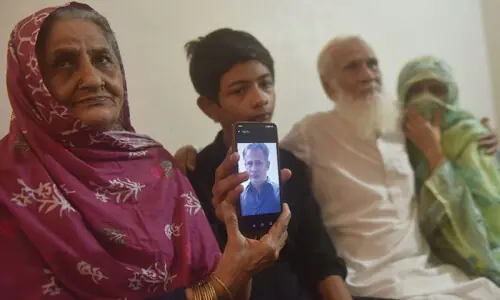
The US report noted that Indian authorities permitted limited access to prisoners, although some family members claimed authorities denied access to relatives, particularly in restive areas, including the occupied Jammu and Kashmir.
The report pointed out that the National Human Rights Commission of India (NHRC) received and investigated prisoner complaints of human rights violations throughout the year. “But “civil society representatives believed few prisoners filed complaints due to fear of retribution from prison guards or officials,” it added.
Following New Delhi’s August 2019 abrogation of a special constitutional provision that provided autonomous status for Jammu and Kashmir, Indian “authorities used a public safety law to detain local politicians without trial,” the report added. Those released were required to sign bonds agreeing not to engage in political activity.
The US report noted that the Public Safety Act (PSA), which applies only in the occupied Jammu and Kashmir, “permits authorities to detain persons without charge or judicial review for up to two years without visitation from family members.”
According to this report, torture and cases of cruel, inhuman, or degrading treatment or punishment were common in both India and Pakistan.
So were arbitrary detention; harsh and life-threatening prison conditions; political prisoners; politically motivated reprisal against individuals and arbitrary or unlawful government interference with privacy.
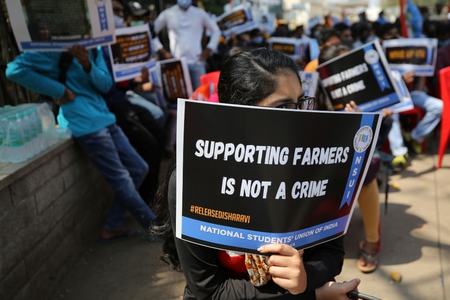
The State Department reported serious restrictions on free expression, the press, and the internet, including violence against journalists, unjustified arrests and disappearances of journalists, censorship, and site blocking in both countries.
Other issues include government interference with the rights of peaceful assembly and freedom of association, such as overly restrictive nongovernmental organisation laws.
Both governments also placed severe restrictions on religious freedom and freedom of movement. Corruption within the bureaucracy, lack of investigation and accountability for violence against women were also common.
Problems identified in India include trafficking in persons; crimes involving violence or threats of violence targeting members of racial and ethnic minorities. The chapter on India also mentioned crimes involving violence or threats of violence targeting lesbian, gay, bisexual, transgender, or intersex persons by nonstate actors.
The chapter on Pakistan mentioned “threats of violence, or unjustified arrests or prosecutions against journalists, use of criminal libel laws to prosecute social media speech and censorship, and site blocking.”
The report noted that in both countries, efforts to address the abuses were marred by “a lack of accountability as official misconduct persisted at all levels of government, contributing to widespread impunity.”
In Pakistan, “investigations and prosecutions of individual cases took place, but lax enforcement, a shortage of trained police officers, and an overburdened and under-resourced court system contributed to a low number of convictions.”
Published in Dawn, March 31st, 2021