Pakistan, Uzbekistan agree to finalise Preferential Trade Agreement


ISLAMABAD: Pakistan and Uzbekistan on Wednesday agreed to finalise bilateral Preferential Trade Agreement (PTA) within three months to further boost bilateral trade volume.
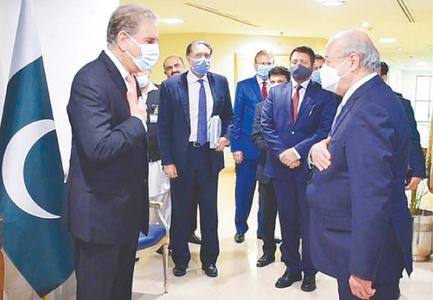
At the 6th meeting of the Uzbek-Pakistani Intergovernmental Commission on Trade-Economic and Scientific-Technical Cooperation (IGC) held in Tashkent, both sides agreed to form joint working groups on agriculture, information technology, education and mineral sectors to boost cooperation, said a news release issued here.
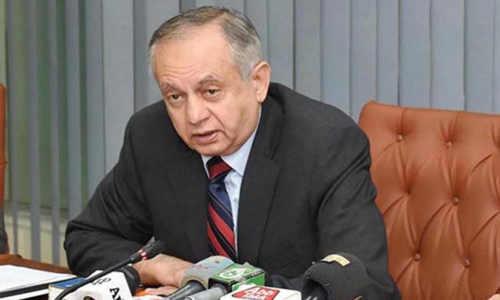
The meeting was co-chaired by Deputy Prime Minister and Minister of Investments and Foreign Trade Sardor Umurzakov and Commerce Adviser Abdul Razak Dawood.
Mr Umarzakov thanked Pakistan for taking the relationship with Uzbekistan to a strategic partnership level.
Imran starts two-day visit to Central Asian nation today
They both agreed that trans-Afghan corridor which connected Uzbekistan and Pakistan would play an important role in enhancing bilateral trade between the two countries.
The parties agreed to deepen partnership in the field of industrial cooperation, including by organising joint ventures in the field of textile industry, assembly of agricultural machinery, processing and packaging of fruit and vegetable products.
It was settled to deepen cooperation in energy and mineral sector, agriculture, transportation and communication, labor, education, tourism, science and technology, technology parks, housing and communal services, intercity collaborations, standards, meteorology, culture and youth affairs.
They recognised the importance of closer collaboration for post-Covid recovery to sustainably recover through technology, innovation and economic partnership, aiming at increased economic diversification, sustainable growth, building supply chain resilience, and robust regulatory environments. It was also agreed to develop banking links to create favourable conditions for the further development of bilateral trade.
Meanwhile, two countries agreed to organise Uzbek-Pakistani specialised exhibitions (Made in Uzbekistan/Made in Pakistan) in Tashkent and Islamabad to promote a wide range of export goods and to facilitate attraction of leading companies in pharmaceuticals, textile, and leather, production of construction materials and agriculture industries and transport and logistics services of both countries.
Amin Ahmed in Rawalpindi adds: Pakistan and Uzbekistan are expected to sign a number of agreements and memoranda of understanding during the two-day official visit of Prime Minister Imran Khan to Tashkent starting Thursday.
Uzbek President Shavkat Mrziyoyev invited Mr Khan who will be accompanied by a high-level business delegation. “Wide-ranging talks between the two leaders will cover the entire gamut of bilateral relations, with a particular focus on trade, economic cooperation and connectivity. They will also exchange views on regional and international issues of mutual interests,” the Prime Minister’s Office said in a press release.The prime minister will address the first Pakistan-Uzbekistan Business Forum. On the sidelines of the forum, business-to-business meetings have also been planned.
In April this year, Prime Minister Imran Khan and Uzbek President Mirziyoyev held virtual summit meeting to discuss the joint promotion of the project for the construction of the Trans-Afghan railway, increasing the trade turnover, enhancing cooperation between leading enterprises and companies of the two countries, resuming air traffic, developing inter-regional contacts, cultural and humanitarian exchanges.
Following the summit, both the leaders agreed to sign joint documents in the political, trade-economic, transport-communication and educational spheres.
Mr Khan will also participate in the International Conference on “Central and South Asia Regional Connectivity: Challenges and Opportunities.”
The conference will be attended by ministers and high representatives from Central and South Asian as well as other important countries, international organisations, financial institutions, think-tanks and scholars.
Published in Dawn, July 15th, 2021