

US freezes nearly $9.5bn of Afghan reserves to block Taliban access to funds
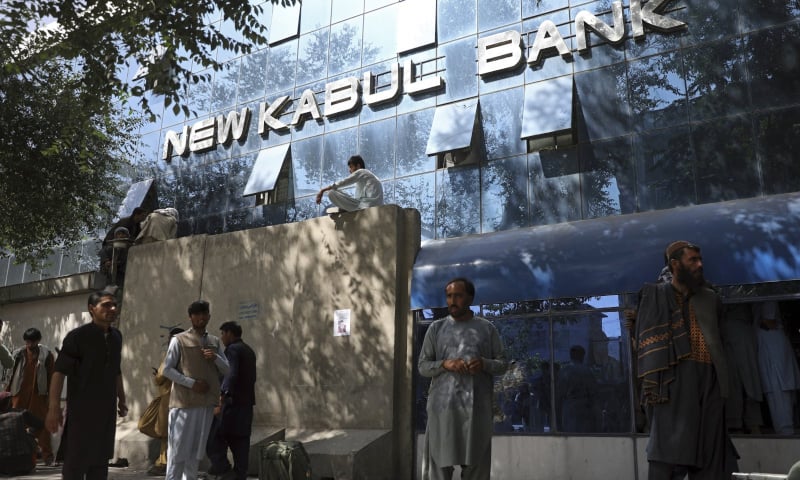

The Biden administration froze about $9.5 billion of the Afghan government’s reserves in US banks on Sunday after the Taliban seized Kabul, according to US media reports.
The undeclared action was first reported by The Washington Post on Tuesday.
The Post reported that US Treasury Secretary Janet Yellen and personnel at the Treasury's Office of Foreign Assets Control had decided to freeze the accounts.
"Any central bank assets the Afghan government have in the United States will not be made available to the Taliban," an administration official told the newspaper in a statement.
According to the report, the US State Department was consulted before the action as was the White House, adding that the Biden administration was contemplating other actions as well to pressure the Taliban.
It pointed out that the Biden administration did not need new authority to freeze the reserves because the Taliban were already under sanctions from an executive order approved after the September 11, 2001, terrorist attacks.
Washington also stopped shipments of cash to Kabul as part of an effort to prevent a Taliban-led government from accessing money, according to a Bloomberg report.
Ajmal Ahmady, acting head of Da Afghanistan Bank (DAB) — the nation’s central bank — tweeted earlier this week that he learned on Friday that shipments of dollars would stop as Washington would not allow the Taliban to access the funds.
According to Bloomberg, the DAB has $9.5bn in assets, a sizeable portion of which is in accounts with the New York Federal Reserve and US-based financial institutions.
The restrictions followed in the wake of the Taliban's nearly complete takeover of Afghanistan.
Taliban co-founder Abdul Ghani Baradar arrived in the country on Tuesday for the first time in more than 10 years. He travelled to Kandahar, the birthplace of the Taliban and the second-largest city in Afghanistan, which was overtaken by the insurgent group last week.
Afghanistan’s currency — Afghani — has faced record losses since Monday, the first working day since the Taliban takeover this weekend.
The Afghani fell as much as 4.6 per cent on Tuesday to 86.0625 per dollar, the fourth day of decline, according to data compiled by Bloomberg.





























