COP26 deal reached as nations rally to compromise


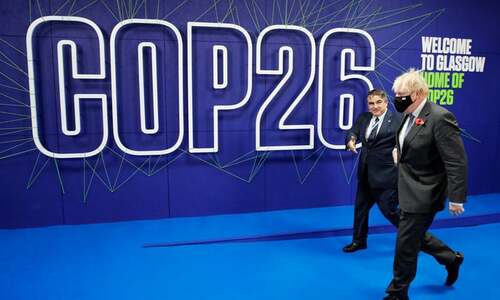
GLASGOW: Nearly 200 nations came together on Saturday on a global deal to combat climate change after two weeks of painful negotiation, but fell short of what science says is needed to contain dangerous temperature rises.
Rich countries stood accused of failing at the COP26 summit in Glasgow to deliver much-needed finance to vulnerable states that are at risk of drought, rising seas, fire and storms.
Britain’s COP26 president Alok Sharma rounded up the marathon negotiations telling delegates: “It is now decision time. And the choices you are set to make are vitally important.”
But there was last-gasp drama as China and India insisted that language on fossil fuels be weakened in the final summit decision text.
Paris deal architect says moot failed to provide immediate help for people suffering now
As the final deal was clinched, a tearful Sharma said “I apologise for the way this process has unfolded. I am deeply sorry,” before banging down his gavel.
Delegates entered the talks charged with keeping the 2015 Paris Agreement goal of limiting temperature rises to 1.5-2C degrees within reach.
They were also tasked with finding the funding for nations most at risk of climate-related droughts, floods and storms supercharged by rising seas.
Observers said the agreement fell far short of what is needed to avert dangerous warming and help countries adapt or recoup damages from the disasters already unfurling globally.
Laurence Tubiana, the architect of the Paris deal, told AFP that “COP has failed to provide immediate assistance for people suffering now”.
Sharma earlier told delegates in the final throes of marathon talks that they faced a “moment of truth for our planet, for our children and our grandchildren”.
The final text urged nations to accelerate efforts to “phase down” unfiltered coal and “phase out” inefficient fossil fuel subsidies.
Large emitters China and India had opposed the mention of the polluting fuels, and the language in the final text was significantly more nuanced than earlier drafts.
The deal also called on all countries to accelerate their emissions cuts by submitting new national plans by 2022, three years earlier than agreed in Paris.
But after resistance from rich nations led by the United States and EU, the text omitted any reference to a specific finance facility for the loss and damage climate change has already caused in the developing world.
It instead only promised future “dialogue” on the subject.
“For some loss and damage may be the beginning of conversation and dialogue,” said Shauna Aminath, the Maldives environment minister. “But for us this is a matter of survival.”
Although host Britain said it wanted COP26 to keep the 1.5C temperature cap in reach, a UN scientific assessment last week said countries’ latest climate plans put Earth on course to heat 2.7C.
The text noted “with deep regret” that wealthy nations had also failed to stump up a separate annual sum of $100 billion they promised over a decade ago. It urged countries to pay up “urgently and through 2025”.
Published in Dawn, November 14th, 2021