West links humanitarian aid for Afghanistan to basic rights


OSLO: Western diplomats on Tuesday linked humanitarian aid to Afghanistan to an improvement in human rights after meeting a Taliban delegation on a landmark visit to Europe.
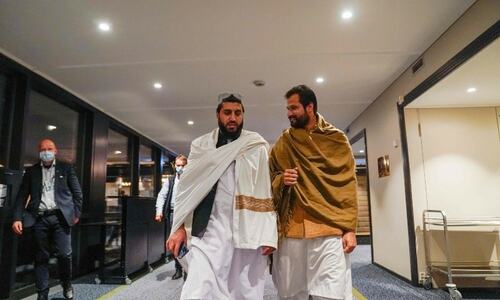
On the final day of the Taliban’s first official trip to Europe since returning to power in August, the fundamentalists held talks behind closed doors with several Western diplomats. The Taliban are seeking international recognition and financial aid.
Afghanistan’s humanitarian situation has rapidly deteriorated since the group returned to power in August 2021, when international aid came to a sudden halt, worsening the plight of millions of people already suffering from hunger after several severe droughts.
Western diplomats laid out what they expected from the Taliban during the talks.
The European Union’s special envoy to Afghanistan, Tomas Niklasson, wrote on Twitter that he had “underlined the need for primary and secondary schools to be accessible for boys and girls throughout the country when the school year starts in March”.
He was responding to a tweet from a spokesman for the Afghan foreign ministry hailing the EU’s commitment to “continue its humanitarian aid to Afghanistan”.
The Taliban delegation, led by Foreign Minister Amir Khan Muttaqi, met senior French foreign ministry official Bertrand Lotholary, Britain’s special envoy Nigel Casey, and members of the Norwegian foreign ministry.
At the United Nations in New York, Norwegian Prime Minister Jonas Gahr Store said the talks appeared to have been “serious” and “genuine”.
“We made clear we want to see girls back in school in March, also those above 12. We want to see humanitarian access,” he said.
The Taliban have hailed this week’s talks — held in a hotel near Oslo — as a step toward international recognition.
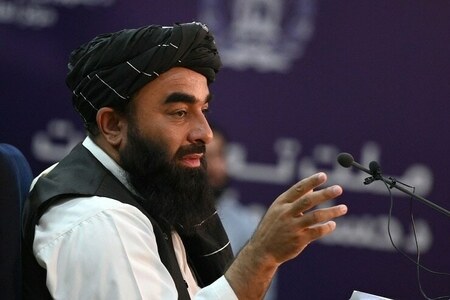
The Taliban foreign minister, speaking on the sidelines of Monday’s talks, said: “Norway providing us this opportunity is an achievement in itself because we shared the stage with the world.” “From these meetings we are sure of getting support for Afghanistan’s humanitarian, health and education sectors,” he added.
Norway has insisted the talks do “not represent a legitimisation or recognition of the Taliban”.
But its decision to invite the group — and fly them over in a chartered jet at great expense — has been heavily criticised by some experts, members of the diaspora and Afghan activists.
No country has yet recognised the fundamentalist regime, and the international community is waiting to see how the Taliban intend to govern before releasing aid.
The Norwegian prime minister said he knew many were troubled by the meeting in Oslo, but said it was a first step to avoid “humanitarian disaster”.
“The alternative to leave Afghanistan, one million children, at the danger of starving... that is no option. We have to deal with the world as it is.” Norwegian state secretary Henrik Thune earlier said: “This is not the beginning of an... open-ended process.” “We are going to place tangible demands that we can follow up on and see if they have been met”, he told Norwegian news agency NTB ahead of his talks with the delegation on Tuesday evening.
Following the talks, the Taliban left Norway late Tuesday without making any further statements.
The demands were to include the possibility of providing humanitarian aid directly to the Afghan people, according to NTB.
Norway was also to call for human rights to be respected, in particular those of women and minorities, such as access to education and health services, the right to work, and freedom of movement.
While the Islamists claim to have modernised, women are still largely excluded from public-sector employment and most secondary schools for girls remain closed.
Published in Dawn, January 27th, 2022