Drought, disease and distance: recipe for disaster in Balochistan's Pirkoh


QUETTA: Cholera outbreaks are extremely dangerous, in the best of times; but if combined with a crippling water shortage and lack of access to proper healthcare, they can become a recipe for disaster.
This is what is happening in Pirkoh, a tehsil in Balochistan’s sprawling Dera Bugti district. The site of a massive Oil and Gas Development Company Limited facility, this far-flung town is experiencing the double-whammy of an outbreak coupled with extreme water scarcity.
Noor Bugti, one of the activists who recently took to the streets to demand attention for the town’s problems, shared a chilling example of how bad things are there.
“The family of one little girl who recently died in the town were struggling to find water to perform her last rites,” he says.
“If there is no water for the dead, how do you think we can find water to drink,” he asks, pointedly.
Official figures put the death toll from cholera at six, including three children. Locals, however, insist that this number is being understated.
District Health Officer Dr Azam Bugti told Dawn that the first case of cholera was reported from the area on April 17, but confirmation of the test results from Islamabad was only received by the end of last month after which they started treating patients.
According to him, 2,249 cases have been treated and there are currently only 38 patients in the area. “Things are under control now,” he claims.
But locals disagree. They say the situation is far from being ‘under control’ and that there have been nearly two dozen deaths from this outbreak so far.
The DHO, for his part, contradicts these claims, insisting instead that there is a complete lack of community awareness about the disease. “Some patients have even run away from hospitals during treatment, or discharged themselves on their own,” he claims.
Whatever the veracity of these claims, one thing is certain; there is no formal water supply in this town of over 40,000.
Earlier this month, Balochistan Chief Minister Mir Abdul Qudoos Bizenjo approved additional funds of Rs300 million for the completion of ongoing water supply projects in Dera Bugti district on an emergency basis, an acknowledgement of how dire the situation has become.
But for now, locals have to seek donations and collectively buy water from tankers, at the steep cost of Rs3,500 per tanker.
One of the social activists leading the quest for water here is Gul Zar Bugti.
While speaking to Dawn, he is fully immersed in the task of arranging tankers to provide water for the parched citizens of the area. The donations he has collected will pay for tankers coming all the way from the hills of Dera Bugti, which is a good 15km trip up mountainous and bumpy roads.
These tankers, however, are expensive and merely a stopgap arrangement, mostly out of reach for locals.
Gul Zar Bugti tells Dawn the town has been gripped by a severe shortage of water since 2015. “Projects that could fulfill the water needs of Pirkoh have been announced, but are confined to papers only,” he claims, blaming corrupt practices within the government.
This is why, he says, his town has remained disconnected from water sources and has to rely on rain water for its needs.
Thanks to the noise made by him and his fellow activists, the government has been jolted into action.
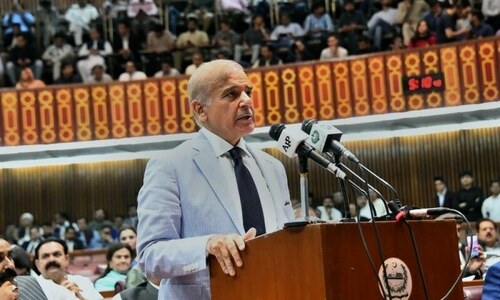
Following the protests, which went viral on social media as well, the Balochistan health secretary has visited Pirkoh, while the prime minister announced on Sunday directives to provide emergency relief to the residents of Dera Bugti district.
But will these actions translate into long-term relief for the residents of this locality? Locals are hopeful, yet pessimistic. They have heard it all before; but seeing is believing.
Published in Dawn, May 16th, 2022