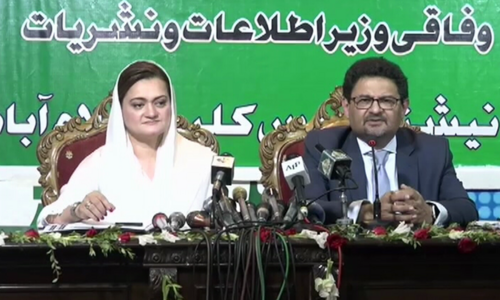
Need a 'tight' monetary policy, says Miftah after IMF talks


Finance Minister Miftah Ismail said on Thursday that "we would need to have a tight monetary policy and consolidate our fiscal position" after he returned from Doha following the conclusion of the latest week-long round of talks with the International Monetary Fund.
The talks, held in Doha, were aimed at reaching an agreement on policies at the conclusion of the IMF's seventh review of its $6 billion programme for Pakistan, which has been stalled since early April.
Ismail said the IMF and Pakistan discussed targets for FY23, where, in light of high inflation, declining forex reserves and a large current account deficit, we would need to have a tight monetary policy and consolidate our fiscal position. "Thus government is committed to reducing the budget deficit in FY23," he added.
The IMF has made the resumption of the programme conditional on the reversal of fuel and energy subsidies introduced by the previous PTI government, which have been criticised and termed unsustainable by many, including the PML-N and others who are part of the incumbent coalition goverment.
Ismail said the IMF team emphasised the importance of "rolling back" fuel and power subsidies, which were given by the previous administration in contravention of its own agreement with the Fund. "The government is committed to reviving the IMF programme and put Pakistan back on a sustainable growth path."
Following the talks, the Finance Division said in a statement the IMF emphasised the "importance of rolling back fuel and power subsidies, which were given by the previous administration in contravention of its own agreement with the Fund".
"The IMF expressed concern on the fiscal and current account situation arising from the government's actions, especially electricity and fuel subsidies and slippages," it said."The meetings identified the areas of divergence and corrections required in the current account and fiscal deficit."
The Finance Division said the consultations, which began on May 18, "reviewed [the] fiscal and monetary situation for FY2022 and proposed measures for FY2023".
It added that the government remained committed to reducing the overall budget deficit in FY2023, reviving the IMF programme and putting "Pakistan back on a sustainable growth path".
IMF's statement
On Wednesday, the IMF had shared similar details about the meeting in a statement and "emphasised the urgency of concrete policy actions, including in the context of removing fuel and energy subsidies and the FY2023 budget, to achieve programme objectives".
According to the IMF, the mission held "highly constructive discussions" with the Pakistani authorities, during which considerable progress was made on various matters, including on the need to continue to address high inflation and the elevated fiscal and current account deficits while ensuring adequate protection for the most vulnerable.
"In this regard, the further increase in policy rates implemented on May 23 was a welcome step. On the fiscal side, there have been deviations from the policies agreed upon in the last review, partly reflecting the fuel and power subsidies announced by the authorities in February," it said.
The subsidies
The PTI had announced a four-month freeze (until June 30) on petrol and electricity prices on February 28 as part of a series of measures to bring relief to the public.
The PML-N had severely criticised former prime minister Imran Khan's government for "derailing" the IMF programme through these subsidies but despite being at the helm for over a month, it has not reversed them. The finance minister has repeatedly said these subsidies are not feasible and are costing the government billions.
The IMF has made the resumption of its programme with Pakistan, along with a $2bn expansion, conditional on the reversal of these subsidies.
When the latest round of negotiations had begun with the IMF, Ismail had conveyed to the Fund that the government understood the current economic crisis and agreed that it would have to take "tough decisions" while mitigating the effects of inflation on middle to low-income groups.
However, before leaving for Doha on Monday to join the talks in-persons, he ruled out the reversal of the subsidies, saying that the "nation cannot endure it".