Gaza counts cost of strikes as truce holds between Israel, Islamic Jihad



Shell-shocked Gazans on Monday sifted through the rubble of three days of deadly strikes by Israel as a truce held with the Islamic Jihad and life slowly returned to normal with power restored.
The sole power plant in the blockaded enclave “started working to generate electricity” after a two-day shutdown, distributor spokesman Mohammed Thabet told AFP, hours after fuel trucks for the plant entered Gaza.
A ceasefire reached late on Sunday has raised hopes of ending the intense attacks that killed 44 people according to Gaza's health ministry, with 15 children among the dead.
The power shutdown on Saturday had sparked concern about the impact on hospitals treating casualties and on other vital services, amid the worst fighting in Gaza since an 11-day war last year.
The Israeli military said roads would slowly reopen in the border area.
“It was decided to gradually lift the restrictions,” which have seen Israelis living near Gaza remain close to their bomb shelters, the army said.
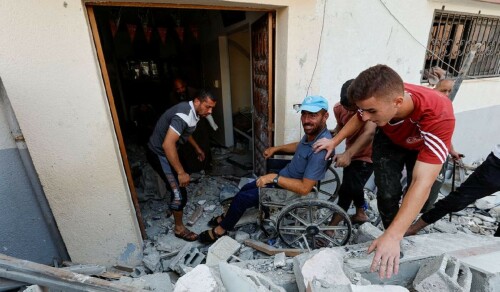
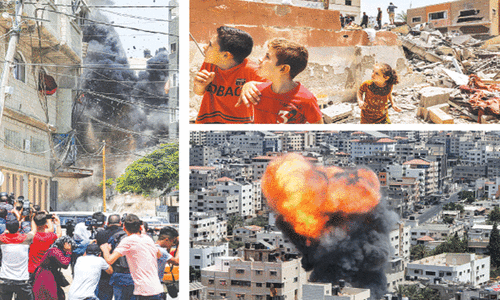
Across areas hit by air strikes in Gaza, Palestinians tried on Monday to salvage belongings from the rubble of shattered homes and to start clearing the debris.
In pictures: Israel-Gaza conflict escalates with airstrikes
Mohammed Alai, who lives east of Gaza City, described the situation as “tragic and tough”.
“We have a lot of martyrs and wounded, and devastation and destruction, but Gaza is tending to its wounds,” he said.
Hundreds wounded
US President Joe Biden welcomed the ceasefire and thanked Egyptian President Abdel Fattah al-Sisi for his country's role in brokering it.
Israeli Prime Minister Yair Lapid's office late on Sunday thanked “Egypt for its efforts” as it agreed to the truce, but said that “if the ceasefire is violated”, Israel “maintains the right to respond strongly”.
Islamic Jihad, an Iran-backed group, also accepted the truce but said it too “reserves the right to respond” to any aggression.
Tehran said it will always “defend the active resistance”.
“A ceasefire was established because the Zionists (Israel) only understand the language of power,” Iranian Foreign Minister Hossein Amir-Abdollahian wrote on Instagram.
Starting on Friday, Israel had launched a heavy aerial and artillery bombardment of Islamic Jihad positions in Gaza, leading the group's members to fire hundreds of rockets in retaliation.
In addition to those killed, Gazan health officials said 360 people were wounded in the Palestinian enclave, which is run by Hamas.
A senior Israeli diplomatic official claimed on Monday that “most of the civilians that were killed in Gaza were killed by Islamic Jihad rockets” that fell short or misfired.
The group on Monday said 12 of its leaders and members had been killed.
Three people in Israel were wounded by shrapnel, while 31 others were lightly hurt while running for safety, emergency services said.
Islamic Jihad member Mohammad al-Hindi said the ceasefire deal “contains Egypt's commitment to work towards the release of two prisoners”.
They were named as Bassem al-Saadi, a senior figure in the group's political wing who was recently arrested in the occupied West Bank, and Khalil Awawdeh, a member also in Israeli detention.
'A very serious blow'
Islamic Jihad is aligned with Hamas but often acts independently. Hamas has fought four wars with Israel since seizing control of Gaza in 2007, including the conflict in May last year.
Israel has said it was necessary to launch a “pre-emptive” operation against Islamic Jihad, while the diplomatic official said the group had been planning an attack by sniper fire or with anti-tank missiles.
The army has killed senior leaders of Islamic Jihad in Gaza, including Taysir al-Jabari and Khaled Mansour.
The senior Israeli diplomatic official said Islamic Jihad had been dealt “a very serious blow” which had “taken them back decades”.