Taliban torn over reforms one year after seizing power


KANDAHAR: One year on from the Taliban’s return to power in Afghanistan, some cracks are opening within their ranks over the crucial question of just how much reform their leaders can tolerate.
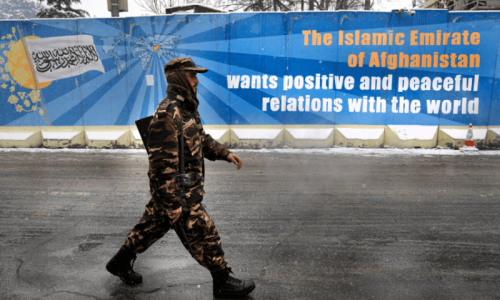
Infamous during their first reign for their brutal crackdowns on rights and freedoms, the Islamists vowed to rule differently this time. On a superficial level at least, they appear to have changed in some respects.
Officials in Kabul have embraced technology, while cricket matches are cheered in full stadiums. Televisions were banned under the Taliban government’s first incarnation, while Afghans now have access to the internet and social media.
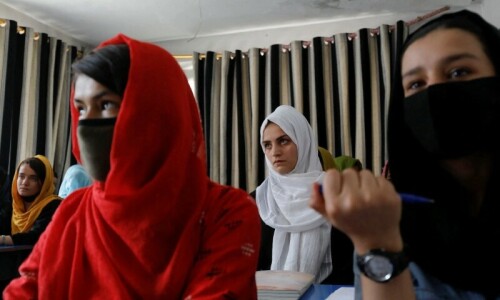
Girls are allowed to attend primary school and women journalists are interviewing government officials — unthinkable during the Taliban’s first stint in power in the 1990s.
The group’s hardline core, composed of battle-hardened veteran fighters, is against any significant ideological change that could be viewed as a sign of capitulation to their enemies in the West.
“You have one (Taliban) camp, which is pushing ahead with what they’re seeing as reforms, and another camp that seems to think even these meagre reforms are too much,” said Ibraheem Bahiss, an Afghanistan analyst with International Crisis Group.
The United States and its allies — which had bankrolled Afghanistan for 20 years — have locked the country out of the global banking system and billions in frozen assets abroad, as they hold out for reforms from the Taliban.
Without significant progress, it is the Afghan people who suffer as the country reels under a massive economic crisis that has seen some families choose between selling their organs or their infant daughters.
‘Retrograde dogmatic views’
On whether the Taliban are even capable of reform, analysts are wary that recent policy changes amount to little more than “tokenism”.
“There are some cases where we could point to an evolution in policy, but let’s be very clear... We’re still looking at an organisation that has refused to move beyond very retrograde, dogmatic views,” said Michael Kugelman, an Afghanistan specialist with the Washington-based Wilson Center think tank.
Most secondary schools for girls remain closed. Many women have been forced out of government work, while many fear venturing out and being chastised by the Taliban.
Published in Dawn, August 11th, 2022