ISLAMABAD: The Standing Committee on Law and Justice of Senate on Friday observed loopholes in the process for appointment of judges in the superior judiciary and stressed the need for empowering the parliamentary committee for such appointments.
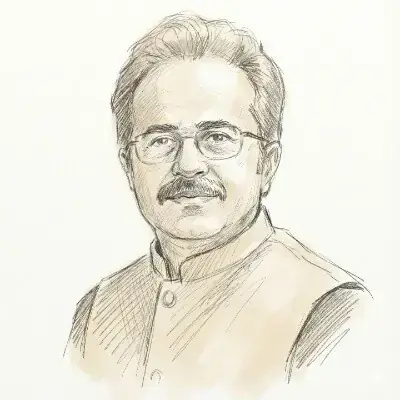
The committee’s chairman, Barrister Ali Zafar, said that without independence of judiciary no nation could progress or society function and no state could survive.
In order to ensure independence of the judiciary, Barrister Zafar said the two most important things were transparency and security in the process of appointment and removal of judges.
Tracing the history of appointments and removal of judges, he said that previously there used to be an unofficial process of consultations between the executive and chief justices concerned and then judges would be appointed, but through the 18th and 19th amendments, a more transparent and robust process had been introduced in which the judges would be appointed in stage one by a judicial commission and then in stage two by a parliamentary committee.
Body okays ‘initiation committee’ to nominate names for consideration
He said that through a judgement of the Supreme Court, the powers of the parliamentary committee had been taken away, thereby denying it any role in approving or rejecting nominations of judges made by the judicial commission and, hence, the parliamentary committee had now been made a toothless body.
Barrister Zafar further said that a recent meeting of the judicial commission also showed there was need to maintain a balance between the executive and the chief justices so that in the matter of appointment of judges, the decision could be made in a more transparent and structured manner.
Regarding amendments, he said there were three potential areas. Firstly, the composition of the judicial commission had been changed and now instead of five judges being part of the judicial commission there would now be four judges, including the chief justice of Pakistan, while three others would be represented by the law minister, attorney general for Pakistan and a representative of the Pakistan Bar Council.
In this manner, he said, the majority of the judicial commission would still remain with the judges.
Barrister Zafar further said that the second part related to re-empowering the parliamentary committee and it had been decided that the parliamentary committee may accept or reject the nominations of the judicial commission and that its decision shall not be subject to challenge in the Supreme Court or a high court.
In this manner, he said there would be a two-layered process to ensure that the best person was appointed as a judge of the Supreme Court.
The amendment also proposed that there would be an initiation committee which would nominate judges of high courts for consideration of the judicial commission and the parliamentary committee.
Previously, there was no initiation committee and nominations for the appointment of high courts’ judges used to be made by the chief justice of Pakistan.
Barrister Zafar opposed this initiation committee and said that the matter of nominations should be left at the discretion of the chief justice of Pakistan and relevant judges of high courts because their nominations could be considered or rejected first by the judicial commission and then by the parliamentary committee and there was no need to add a third-tier, which would only complicate the matter.
He also pointed out that having representation by the Law Minister, Attorney General of Pakistan and Pakistan Bar Council at the stage of nominations would also lead to more conflict and confrontation.
However, the amendment related to the initiation committee was approved.
NAB chairman
Meanwhile, NAB chairman Aftab Sultan also appeared before the Senate Law and Justice Committee in respect of a public petition in which claimants of Eden Estate had demanded the compensation for non-availability of plots in the society.
Barrister Zafar asked the NAB chairman to explain the case and give a framework of how and when the claimants could be compensated for their losses.
The NAB chairman informed the committee that owners of Eden Estate had entered into a plea bargain of Rs16 billion with the bureau and all claimants would be paid the compensation.
He also informed the committee that the payment would be made in three years on a pro rata basis.
Published in Dawn, August 20th, 2022