The present age has seen the decline and fall of Modernism which, having slowly begun to spread across Europe in the late 19th century, had literally exploded in the arts with the first performance of Russian music composer, pianist and conductor Igor Stravinsky’s ballet concert The Rite of Spring in 1913.
It was a year later that Ezra Pound sent T.S. Eliot’s poem ‘The Love Song of J. Alfred Prufrock’ to Harriet Monroe, the editor of Poetry, then the leading poetry magazine in America. She, however, was too mystified by it to want to publish it and only did so eight months later, finally submitting to Pound’s instructions.
Though rejection and censorship — as with Irish novelist James Joyce — and mockery of new forms — as with Eliot’s ‘The Waste Land’ — continued to repress new writers in England and America, Modernism had begun to take hold and, by mid-century, you were not a serious writer unless you subscribed to some element of Modernism. The major publishers, though they continued to cater to popular taste, maintained an interest in writers who made it new.
And then came the sledgehammer of capitalism. It smashed any work that produced no profit, and that remained untouched by the unthinking simpletons who barely glanced at literature that meant nothing to them, their squirrel brains emptied from gossiping for hours on social media.
Writers interested in new approaches were obliged to seek shelter with small presses, or with subsidised university presses, such as the Yale University Press and the Wesleyan University Press, which were the first to publish John Ashbery, the latter bringing out his book The Tennis Court Oath.
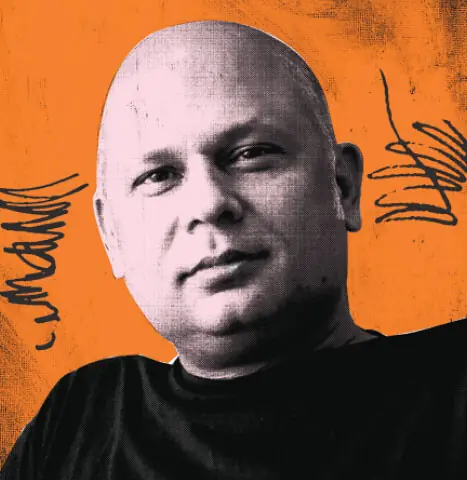
This was the last column written for Books and Authors by the author, shortly before he passed away on June 30. Eos is grateful to his widow Helena la Fontaine and to Muneeza Shamsie for getting it across to us.
The eponymous poem is not a simple poem to fathom, with its title that refers to an important event in the history of the French Revolution. But to know this is only to distract oneself, since the poem has apparently nothing to do with the actual event and Ashbery fixed on the title because it sounded good.
Of the other poems in The Tennis Court Oath, many seem to echo with the curious questions that are buried in the caves deep within the reader’s brain. They evoke a pleasure in the mind without one being able to tell what they are about, unlike Robert Frost’s ‘The Road Not Taken’ which, once read, is instantly understood and remembered forever.
Pound had put Frost in his place among the traditionalists and, though Frost fancied himself as one of the new American greats, he remains knee-deep in the post-Hardy slush that made Thomas Hardy such a favourite with the English.
With Ashbery, however, we are looking at language as a substance. Ashbery had been living in Paris and was the first English-language poet to appreciate the radical approach to writing as observed in the works of Raymond Roussel and Francis Ponge.
For Roussel and Ponge, language was an event on the page with each word flying a flag of its etymological history, so that what the reader experienced was not a conventional meaning, but a perception into the substance of language, an experience that was both mystical and scientific.
Ashbery returned to New York and launched his new poetry. He was writing at a time when the arts seemed to be sending off firecrackers that lit up the American sky with the new as had never been seen or heard before.
In music, Harry Partch created his own instruments for the music he wrote, and Steve Reich brought aural beauty to minimalism — listen to his ‘Music for 18 Musicians’ for the sheer joy of sound.
In painting, Jackson Pollock poured household cans of paint directly on the canvas. There was Pop Art, with Roy Lichtenstein painting huge cartoons and Andy Warhol with his sensational pictures.
In this explosive atmosphere, the poets who came to be known as the New York School made their contribution to the new. Among them was John Ashbery. Reading his early work, one looks in vain for conventional meaning and one realises that, like Pollock pouring paint from a can, Ashbery is pouring language on to the page.
Among the interesting younger poets in Ashbery’s group was his friend James Schuyler. Every generation has ‘interesting younger poets’ who usually fade away, but Ashbery saw that there was something unique in Schuyler and wrote an illuminating ‘Introduction’ to the posthumous volume of Schuyler’s Selected Poems.
Now, I have to admit that, knowing of Ashbery’s close relationship with Schuyler, my immediate thought was that this introduction was a kind gesture to a friend. When I first received the 2007 edition of Schuyler’s Selected Poems, I must have complacently affirmed to myself my notion that these were ‘interesting’ compositions and put the book away.
Some impulse 15 years later made me reread the book and, to my shocked surprise, I observed that Schuyler’s was a unique originality.
As Ashbery beautifully puts it, “The endless, swaying lines, like surf on a calm day, are Schuyler’s invention” and concluding the ‘Introduction’, says of the verses as a whole: “The poems are seldom ‘about’ anything … they are the anything.”
The columnist was Professor Emeritus at the University of Texas, a literary critic and fiction author
Published in Dawn, Books & Authors, August 21st, 2022